
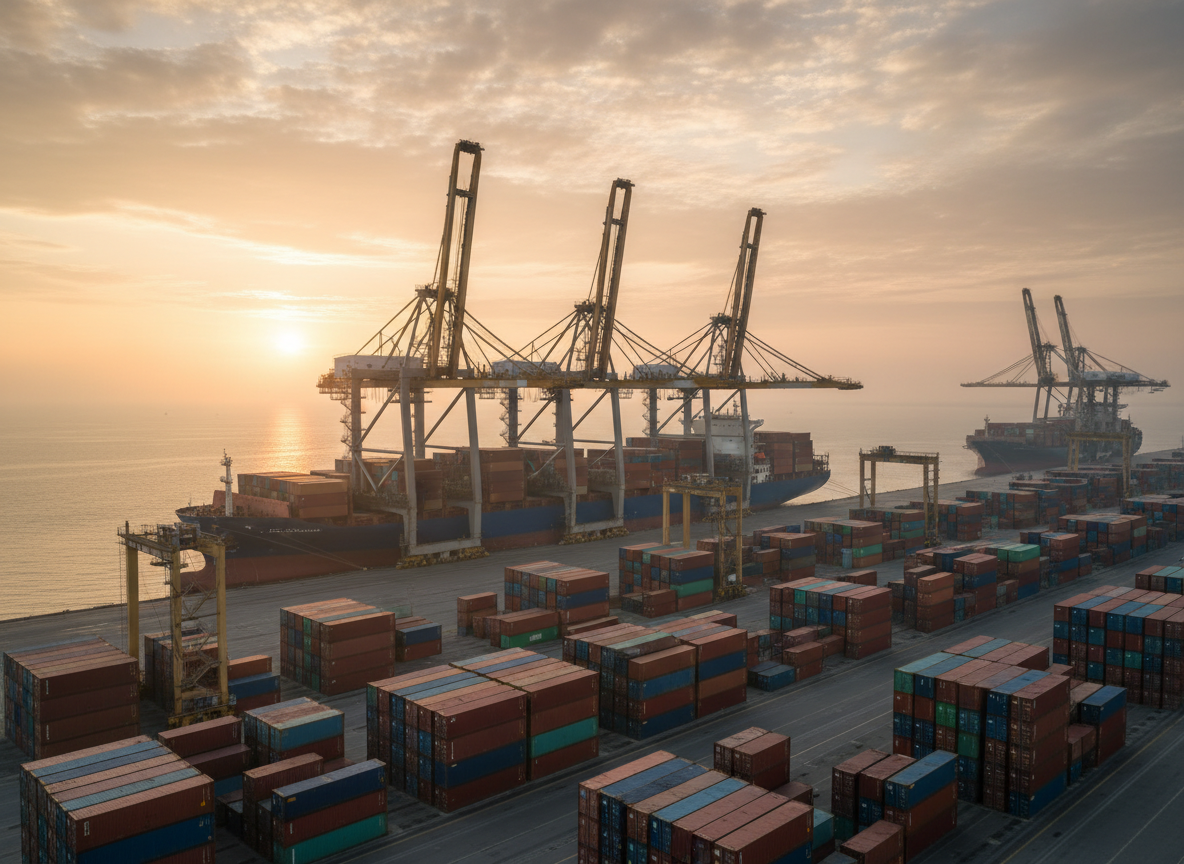
Kern County holds the grant for Foreign-Trade Zone 276, with a large area at Tejon Ranch Commerce Center. Tariff orders since 2025 have narrowed some zone benefits, but duty deferral and duty-free exports still matter for the right importer.
The foreign trade zone Kern County importers can use is FTZ 276, whose grantee is Kern County. Goods in an activated site pay no duty until they leave for U.S. consumption, and exports avoid U.S. duty. Since 2025, tariff orders, including the July 2026 Section 301 tariffs, require many goods to enter in privileged foreign status, which limits some savings.
FTZ 276 at a glance
| Item | Detail |
|---|---|
| Zone | Foreign-Trade Zone 276, Kern County, California |
| Grantee | Kern County (named as the County of Kern Department of Airports in the 2011 Board order) |
| Approved by | U.S. Foreign-Trade Zones Board (Department of Commerce); activation by U.S. Customs and Border Protection (CBP) |
| Key Board orders | Order No. 1789 (Oct. 13, 2011) expanded the zone to a Shafter site; Order No. 2046 (Jan. 31, 2018) re-established and expanded one site and removed two others |
| Best-known area | Tejon Ranch Commerce Center, which Tejon Ranch Co. said grew to 1,093.6 acres of zone area in 2018 |
| Activation limit | Standard 2,000-acre limit for the zone |
| 2025 and 2026 change | Privileged foreign status required for many tariffed goods, including Section 301 goods from July 24, 2026 |
| Benefits that remain | Duty deferral, no U.S. duty on exports, weekly entry filing, waste and scrap handling |
| Status | Zone in place; the grantee holds the current site list |
| What to watch | Further Section 301 and 232 actions and any change to privileged foreign status rules |
Key takeaways
- Kern County is the grantee of Foreign-Trade Zone 276. The FTZ Board’s Order No. 2046 of Jan. 31, 2018 re-established and expanded a zone site, subject to a 2,000-acre activation limit.
- Tejon Ranch Co. said in February 2018 that its FTZ 276 area at Tejon Ranch Commerce Center grew from about 510 acres to 1,093.6 acres.
- An April 2025 tariff order required covered goods admitted to zones on or after April 9, 2025 to take privileged foreign status. That locks in the duty rate at admission and ends the inverted tariff benefit for those goods.
- Goods subject to the Section 301 tariffs that took effect July 24, 2026 may enter a foreign-trade zone only in privileged foreign status.
- U.S. zones handled nearly $949 billion of merchandise in 2023 across more than 1,300 active operations employing over 550,000 workers, a National Association of Foreign-Trade Zones (NAFTZ) official wrote in 2025.
What is FTZ 276 in Kern County?
FTZ 276 is Kern County’s federally approved foreign-trade zone. A foreign-trade zone (FTZ) is a secured area where imported goods can be stored, handled, assembled or manufactured without U.S. customs duty until they leave for the U.S. market. The U.S. Foreign-Trade Zones Board authorizes zones under the Foreign-Trade Zones Act and its regulations (15 CFR part 400). CBP supervises activated sites (19 CFR part 146).
A 2011 Federal Register notice names the County of Kern Department of Airports as grantee. It records Board Order No. 1789 of Oct. 13, 2011, which expanded the zone to a site in Shafter within the Bakersfield CBP port of entry. A 2018 notice names Kern County as grantee. It records Order No. 2046 of Jan. 31, 2018, which expanded one site, removed two others and kept the 2,000-acre activation limit. The notices do not say whether the Shafter site remains in the zone.
The best-known piece of FTZ 276 is at Tejon Ranch Commerce Center (TRCC) along Interstate 5 near Lebec, Kern County. Tejon Ranch Co. announced on Feb. 1, 2018 that its TRCC zone area grew from about 510 acres to 1,093.6 acres. The company’s May 2026 release for a new speculative building still markets TRCC as part of FTZ 276. For the building itself, see Tejon Ranch Commerce Center Building 1B.
How does an FTZ cut tariff costs?
An FTZ does not erase tariffs on goods sold in the United States. It changes when duty is paid, whether it is paid at all on goods that leave the country and, in some cases, the rate. Melissa Irmen of NAFTZ summarized the core benefits in an October 2025 article in Logistics Management: duty deferral until goods enter U.S. commerce, no duty on goods exported from the zone, weekly entry filing that consolidates shipments and favorable handling of waste and scrap.
| Benefit | How it works | Status for privileged foreign goods in 2026 |
|---|---|---|
| Duty deferral | Duty is paid when goods leave the zone for U.S. consumption, not on arrival | Still available; the rate is locked at admission |
| Exports and re-exports | Goods shipped abroad from the zone are not assessed U.S. duty | Still available |
| Inverted tariff relief | A manufacturer could pay the finished-product rate when it is lower than the parts rate | Lost for goods that must take privileged foreign status |
| Weekly entry | One customs entry per week instead of one per shipment | Still available |
| Waste and scrap | Duty treatment of production waste and scrap can be more favorable | Still available |
| Rate lock | Privileged foreign status fixes classification and rate at admission | Protects against later increases but also blocks later decreases |
The value of each benefit depends on the business. A distributor that re-exports a large share of its imports to Mexico or Canada gains the most from duty-free exports. A domestic-only importer gains mainly cash flow from deferral, which matters more when duty rates are high.
How did the 2025 and 2026 tariff orders change FTZ benefits?
They made privileged foreign (PF) status the default for many tariffed goods, which removed the inverted tariff benefit. When goods enter a zone in PF status, their tariff classification and duty rate are fixed at admission, regardless of later manufacturing in the zone or later tariff changes, according to NAFTZ’s Irmen.
The April 2025 reciprocal tariff order directed that covered articles admitted to zones on or after April 9, 2025 be placed in PF status. Those IEEPA tariffs ended after the Supreme Court ruled on Feb. 20, 2026, in Learning Resources, Inc. v. Trump, that the law does not authorize tariffs. Covington reported that CBP stopped collecting them for goods entered after Feb. 24, 2026. Our tariff impact analysis covers the full sequence.
The replacement tariffs carried the PF rule forward. Under the Section 301 actions that took effect July 24, 2026, goods subject to the new tariffs may be admitted to a U.S. zone only in PF status, with narrow exceptions, Troutman Pepper Locke reported. Those tariffs cover 60 trading partners, mostly at 10% or 12.5%, with USMCA duty-free goods and Section 232 metals articles exempt.
Section 232 metals tariffs continue separately, at 50% since April 6, 2026 on products made almost entirely of foreign steel, aluminum or copper, Phillips Lytle noted. The sources cited here do not say whether PF status applies to a given Section 232 product.
Who can use FTZ 276, and how does activation work?
Three parties are involved: the grantee, the operator and CBP. The grantee (Kern County) holds the zone grant and manages site designations. The operator is usually the company using the space. CBP must approve activation before goods are admitted. Manufacturing or processing that changes a product’s tariff status also needs FTZ Board authority.
A company leasing space inside an existing FTZ 276 site can work with the grantee and its own customs broker to activate that space. A company elsewhere in Kern can ask the grantee to bring its site into the zone. Activation requires CBP-approved security, inventory control and recordkeeping, and the zone’s total activated area is capped at 2,000 acres. The requirements are set out in 15 CFR part 400 and 19 CFR part 146.
The public records cited here give no fee schedule or processing timeline for FTZ 276.
- Model the savings with a customs broker, including PF status effects.
- Confirm whether your building is inside a current FTZ 276 site.
- If it is not, ask Kern County about adding the site to the zone.
- Build an inventory control and recordkeeping system that meets CBP requirements.
- Apply to CBP for activation, and seek Board approval if you will manufacture.
What does FTZ status mean for Kern industrial real estate?
Zone status is a leasing advantage for buildings that already have it. When the TRCC zone expanded in 2018, a leasing broker for the center described FTZ access as a major draw for logistics and warehouse tenants that other regional projects lack. That is a marketing view, but it shows how zone status enters site selection. Our guide to why Kern County works for logistics puts TRCC in its freight context.
Kern’s market gives FTZ users room to negotiate. A national brokerage report counted 1,499,945 SF of positive net absorption in Bakersfield buildings of 50,000 SF and larger in Q2 2026, with 11.3% vacancy and an average lease rate of $0.60 per SF NNN. A tenant whose duty bill is large relative to rent can justify paying for security upgrades and compliance systems.
For owners, adding a building to a zone is usually tenant-driven. Leases should cover who pays for fencing, access control and CBP-required systems, who is the operator of record and what happens to zone status at lease end. Zone status can be tied to the land, a site designation or a specific operator. Our overview of types of industrial property helps match a building type to a zone user.
What should Kern importers and owners watch next?
- Any new Section 301 or Section 232 actions, and whether they require PF status in zones.
- Court challenges to the July 2026 Section 301 tariffs.
- IEEPA refund processing for duties paid in 2025, which can affect cash available for zone setup.
- The current list of FTZ 276 sites and activated operators, from the grantee.
Illustrative example: a Kern distributor importing $10 million a year
A distributor with $10 million of annual imports at 12.5% could save $375,000 in duty by re-exporting 30% of them from a zone. Assume the distributor operates at an activated FTZ site and imports $10 million a year of goods subject to a 12.5% Section 301 tariff. It re-exports 30% to Mexico. Assume the Section 301 tariff is the only duty and ignore fees. These numbers are illustrative only and ignore other duties and drawback.
Outside a zone, the importer would pay $1.25 million of duty at entry and would pursue any available refund on re-exported goods separately. Inside the zone, the $3 million of goods shipped to Mexico are not assessed U.S. duty, a saving of $375,000. Duty on the $7 million sold domestically, $875,000, is paid only as goods leave the zone.
Because the goods must take privileged foreign status, the 12.5% rate is locked at admission. If rates fell later, the importer would not benefit on goods already admitted.
| Scenario | Duty paid | Timing |
|---|---|---|
| No FTZ | $1,250,000 | At entry |
| FTZ, 30% re-exported | $875,000 | As goods leave the zone for U.S. sale |
| Difference | $375,000 less duty | Plus deferral on the rest |
Frequently asked questions
Does Kern County have a foreign-trade zone?
Yes. Kern County is the grantee of Foreign-Trade Zone 276. Federal Register notices show the FTZ Board expanded the zone to a Shafter site in 2011 (Order No. 1789) and re-established and expanded a site in 2018 (Order No. 2046), with a 2,000-acre activation limit. Tejon Ranch Commerce Center markets itself as part of FTZ 276.
Is Tejon Ranch Commerce Center in a foreign-trade zone?
Tejon Ranch Co. says it is. It announced in February 2018 that its FTZ 276 area at the center grew from about 510 acres to 1,093.6 acres, and a May 2026 release for a new 510,000 SF building still describes the center as part of FTZ 276. A tenant must still activate its space with CBP before goods can be admitted under zone procedures.
What is privileged foreign status in a foreign-trade zone?
It fixes an imported good’s tariff classification and duty rate when the good is admitted to the zone, whatever happens later in manufacturing or tariff policy. That protects against later rate increases but removes inverted tariff savings. Tariff orders since April 2025, including the July 2026 Section 301 tariffs, require many tariffed goods to enter in this status.
Do foreign-trade zones still save money after the 2025 tariffs?
Yes, for the right users. Duty deferral, duty-free exports, weekly entry filing and better treatment of waste and scrap still apply. The biggest loss is the inverted tariff benefit for goods that must take privileged foreign status. Companies that re-export much of their imports, or carry high duty bills, usually see the clearest savings.
How does a company set up in Kern County’s FTZ?
Start with a customs broker to model savings, then contact Kern County to learn whether your building is in a current FTZ 276 site or can be added. CBP must approve your security, inventory control and recordkeeping before it activates the space. Manufacturing in a zone also needs FTZ Board approval.
Did the Supreme Court tariff ruling change FTZ rules?
Indirectly. The Feb. 20, 2026 ruling ended the IEEPA tariffs, including the reciprocal tariffs whose April 2025 order had required privileged foreign status in zones. The Section 301 tariffs that took effect July 24, 2026 carry their own requirement that covered goods enter zones only in that status.
Are exports from a foreign-trade zone duty-free?
Goods exported from a zone are not assessed U.S. duty, because duty applies only when goods enter the U.S. market. That makes zones useful for Kern distributors and manufacturers that ship to Mexico, Canada or overseas. Other countries’ duties on arrival still apply, and export rules and documentation still have to be followed.
If FTZ status could change the economics of your Kern County operation, call Kern CRE at 855-KERN-CRE (855-537-6273) or contact us to compare buildings inside existing zone sites with locations that could be added to FTZ 276. Get Kern County CRE news monthly: subscribe to the Kern CRE report.
Sources
- Re-Establishment and Expansion of Site, Foreign-Trade Zone 276, Kern County, California (Board Order No. 2046), Federal Register (Foreign-Trade Zones Board), Feb. 6, 2018.
- Expansion of Foreign-Trade Zone 276; Kern County, CA (Board Order No. 1789), Federal Register (Foreign-Trade Zones Board), Oct. 24, 2011.
- Foreign Trade Zone at Tejon Ranch Commerce Center Expands Significantly, Tejon Ranch Co., Feb. 1, 2018.
- Tejon Ranch Co. and Dedeaux Properties to Break Ground on 510,000-Square-Foot Industrial Facility, Tejon Ranch Co. via GlobeNewswire, May 4, 2026.
- U.S. Foreign-Trade Zones in 2025: How new tariffs and proclamations are changing the playbook, Melissa Irmen (NAFTZ), Logistics Management, Oct. 1, 2025.
- Forced Labor, Meet Section 301: New Tariffs Target 60 of America’s Biggest Trading Partners, Troutman Pepper Locke, July 24, 2026.
- Learning Resources, Inc. v. Trump, No. 24-1287, U.S. Supreme Court (via Justia), Feb. 20, 2026.
- IEEPA Tariffs Terminated, Replacement Section 122 Tariffs Take Effect, Covington & Burling, February 2026.
- Tariff Reset: Section 122 Expires as Section 301 Duties Expand to 60+ U.S. Trading Partners, UHY, July 24, 2026.
- Administration Restructures Section 232 Tariffs on Metal and Derivative Products, Phillips Lytle, April 2026.
- South Central Valley Industrial Figures Q2 2026, CBRE, Aug. 3, 2026.
About this article
Kern CRE prepared this article with help from AI research and writing tools. An editor reviewed the draft, checked its facts against the sources linked above and edited it for accuracy and clarity. It is general information, not legal, customs, tax, investment or financial advice. FTZ benefits depend on your goods and the current tariff orders, so consult a licensed customs broker or trade attorney before relying on zone status.