
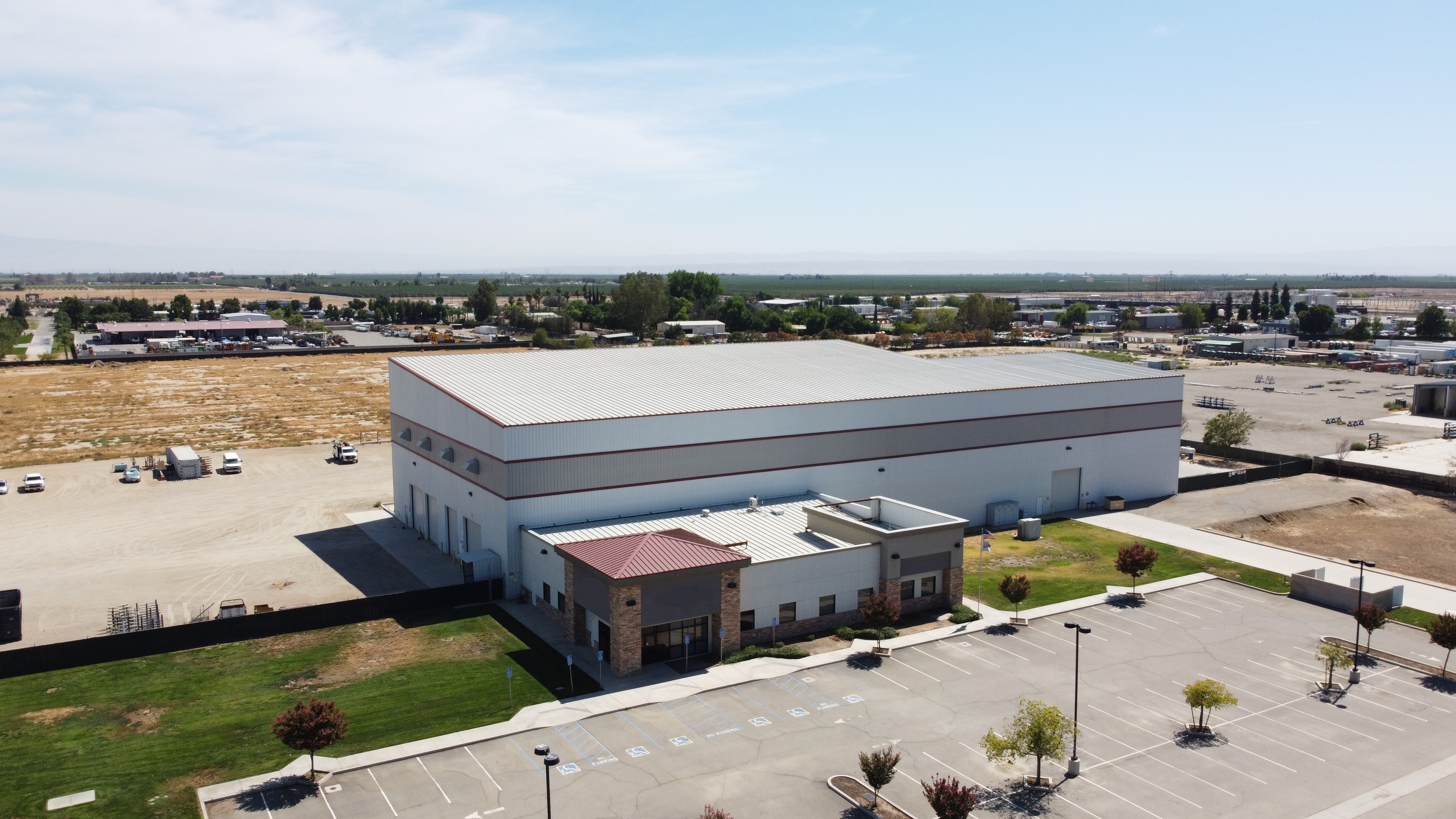
Three ministerial site plans filed in July and September 2026 show the former Alon crude refinery, now a renewable diesel plant owned by Grapevine Energy, still investing about 14 months after its parent left bankruptcy.
Central Valley Renewables Bakersfield, the renewable diesel refinery at 6451 Rosedale Highway in unincorporated Kern County, California, filed three site plans in 2026. They cover a 99.9 MMBtu/hr steam boiler, a thermal oxidizer converted to degas tanks and a vapor control system. Kern County treated all three as ministerial, so no hearing or environmental impact report was required.
Key takeaways
- Kern County treated Site Plan Reviews 139, 141 and 142 (Map 102) as ministerial and filed CEQA exemptions that the State Clearinghouse logged July 9 and Sept. 25, 2026.
- SPR 139 adds a 99.9 MMBtu/hr steam boiler with selective catalytic reduction. SPR 141 converts an existing thermal oxidizer to degas tanks. SPR 142 adds a vapor control system.
- The plant delivered its first renewable diesel in December 2024 and was designed for about 210 million gallons a year, according to its then-parent, Global Clean Energy Holdings.
- Global Clean Energy emerged from Chapter 11 on Aug. 12, 2025, as Grapevine Energy, privately held by senior lenders led by OIC and by CTCI Americas.
- The California Air Resources Board (CARB) certified five carbon intensity pathways for the plant’s renewable diesel on March 26, 2026.
Project at a glance
| Item | Detail |
|---|---|
| Project | Three accessory upgrades at an existing renewable fuels refinery: a 99.9 MMBtu/hr steam boiler with SCR emissions controls (SPR 139), conversion of an existing thermal oxidizer to degas tanks (SPR 141) and a vapor control system (SPR 142) |
| Location | 6451 Rosedale Highway (State Route 58), Bakersfield, CA 93308, unincorporated Kern County; state records list Fruitvale Avenue and Brimhall Road as cross streets |
| Applicant | Central Valley Renewables, LLC. Grapevine Energy Holdings, LLC, formerly Global Clean Energy Holdings, owns the plant |
| Jurisdiction | Kern County Planning and Natural Resources Department |
| Case numbers | SPR 139, Map 102 (County no. PLC26-00215; SCH 2026070361); SPR 141, Map 102 (SCH 2026091120); SPR 142, Map 102 (SCH 2026091119) |
| Zoning | M-3 PD (Heavy Industrial, Precise Development Combining) |
| Size | The filings state no acreage, cost or output change. A 2012 state water board order put the site at about 600 acres; Grapevine says 500-plus acres |
| CEQA | Statutory exemption for ministerial projects (CEQA Guidelines Section 15268) |
| Status | SPR 139 notice received for filing July 7, 2026 (logged July 9). SPR 141 and 142 notices filed and logged Sept. 25, 2026 |
| Next step | Building, fire and any air district permits. The 35-day CEQA challenge window for SPR 141 and 142 runs to about Oct. 30, 2026 |
What did Central Valley Renewables file with Kern County?
Central Valley Renewables, LLC filed three site plan reviews in 2026 for new equipment at its refinery. Each is described as accessory to “an existing renewable fuels refinery” in an M-3 PD zone district, according to CEQAnet, the State Clearinghouse’s public database.
- SPR 139, Map 102 (County no. PLC26-00215): “the installation of a 99.9 MMBtu/hr steam boiler with Selective Catalytic Reduction (SCR) emissions controls,” per the County’s notice of exemption. The County Clerk received it for filing July 7, 2026, and the State Clearinghouse logged it July 9.
- SPR 141, Map 102: “conversion of an existing thermal oxidizer for the purpose of degassing existing tanks,” filed Sept. 25, 2026 (CEQAnet).
- SPR 142, Map 102: “Installation of a vapor control system,” logged Sept. 25, 2026 (CEQAnet).
The filings give no costs, construction dates, job counts or tank details, and none states a change in production capacity.
What the equipment does
The boiler makes steam and is rated just under 100 million Btu per hour. Selective catalytic reduction (SCR) uses a catalyst to cut nitrogen oxide emissions from combustion equipment. A thermal oxidizer burns off hydrocarbon vapors. Degassing clears vapors out of a tank so crews can clean it, inspect it or return it to service. A vapor control system captures vapors from tanks or loading operations.
Why did the refinery upgrades need no hearing?
Zoning did the work. Kern County found the equipment accessory to a refinery, which is an allowed use in the M-3 heavy industrial district, so each plan was ministerial. The boiler notice says ministerial projects are exempt from the California Environmental Quality Act under Guidelines Section 15268, and the September filings cite the same section.
Ministerial means staff check plans against fixed standards instead of exercising discretion. No Planning Commission hearing or environmental impact report was required. For a primer on how entitlements and CEQA work on heavy industrial land, see our guide to buying industrial land in Kern County and industrial zoning in Bakersfield and Kern County.
Where is the Bakersfield renewable diesel refinery, and what was it before?
The refinery fronts Rosedale Highway (State Route 58) in the 93308 ZIP code. It sits in unincorporated Kern County, so the County, not the City of Bakersfield, handles its site plans.
It is one of the oldest industrial sites on the corridor. A 2012 cleanup and abatement order from the Central Valley Regional Water Quality Control Board described the refinery as “approximately 600 acres” and traced its ownership to Mohawk Oil Company in 1932. Reserve Oil and Gas, Getty Oil, Texaco and its refining affiliate, and Equilon followed. Shell bought Texaco’s refining affiliate and its interest in Equilon in December 2001, the order says.
Big West of California, “a subsidiary of Flying J, Inc.,” bought the refinery from Equilon in 2005, and Alon took over in 2010. The order adds: “Refining was temporarily suspended in February 2009. ALON resumed refining in June 2011.”
The crude-by-rail plan that died
Alon’s next plan drew a fight. Kern County’s 2014 draft EIR for the Alon Bakersfield Refinery Crude Flexibility Project covered 422 acres zoned M-3 PD, M-2 PD and M-1 PD. It proposed expanded rail and storage facilities, process upgrades and up to three more boilers, while keeping the refinery’s 70,000-barrel-per-day maximum capacity.
Opponents sued in October 2014. In November 2017, the Fifth District Court of Appeal found the environmental report did not adequately assess air pollution or derailment risk, and on Jan. 15, 2019, supervisors voted to rescind the approval, Courthouse News reported.
From crude oil to renewable diesel
In May 2020, Global Clean Energy Holdings bought Alon Bakersfield Properties from Delek US Holdings for $40 million, KGET reported. The company planned to process camelina and other vegetable oils, used cooking oil and distillers’ corn oil. Grapevine now calls what it bought “a dormant 500+ acre crude oil facility” (Grapevine Energy).
The converted plant delivered its first renewable diesel in December 2024 and sells through a supply and offtake agreement with Vitol, Inc. The company cited a “design capacity of up to approximately 210 million gallons annually,” with renewable propane and renewable butane as co-products. Our related report covers how the refinery changed hands in Chapter 11.
Who is Central Valley Renewables?
Central Valley Renewables is the new name of the plant once called Bakersfield Renewable Fuels. A CARB pathway summary names the applicant as “Central Valley Renewable Fuels, LLC (Central Valley Renewables)” and says the facility, “formerly known as Bakersfield Renewable Fuels,” was a crude oil refinery converted to renewable diesel production that began in 2024. County notices use the name Central Valley Renewables, LLC.
The parent is Grapevine Energy Holdings, LLC, formerly Global Clean Energy Holdings. Global Clean Energy filed a prepackaged Chapter 11 case in April 2025 in the U.S. Bankruptcy Court for the Southern District of Texas, backed by “$100 million in new money debtor-in-possession financing and services” (Business Wire).
The court confirmed the plan July 28, 2025. The company emerged Aug. 12, 2025, “privately held by the Senior Lenders, led by OIC, and CTCI Americas, Inc.,” with more than $60 million in exit financing commitments, it announced.
At emergence, the company said the Bakersfield plant was “producing approximately 250,000 gallons of renewable diesel daily.” By our calculation, that pace equals roughly 91 million gallons a year, well under the 210 million gallon design figure. No 2026 output figure has been published. The plant’s website says it has created more than 100 full-time jobs and nearly 900 indirect jobs, a company estimate.
What feedstocks does the plant use?
The plant’s newest state approvals cover common oils rather than its signature crop. Camelina, “a nonfood, regenerative, intermediate oilseed crop,” is Grapevine’s focus. CARB certified five Low Carbon Fuel Standard pathways on March 26, 2026, effective from Oct. 1, 2025, for renewable diesel made from soybean oil (62.89 grams CO2e per megajoule), canola oil (57.39), distillers’ corn oil (36.74), used cooking oil (25.07) and animal fats (39.97).
Lower scores earn more credits under the standard, which we explain in our Low Carbon Fuel Standard guide. The same CARB document describes a stand-alone plant with an internal steam methane reformation reactor, the unit that makes hydrogen for the process.
Why does California need in-state renewable diesel plants?
California is the market for this fuel. The U.S. Energy Information Administration reported in July 2023 that “California accounts for nearly all renewable diesel consumption in the United States” and that the state’s 2021 consumption was more than eight times what it produced. Most supply came from other states or imports, mostly from Singapore. That gap is the business case for converting refineries like Bakersfield’s.
What do the upgrades mean for Rosedale Highway industrial property?
This is an owner-user plant, not leasable space, so the filings will not move vacancy. The signal is that the owner is putting capital into the site. Boiler, vapor control and tank projects bring contractors, fabricators, inspection and environmental firms, and truck traffic. That is the kind of demand that supports yards and shop buildings along Rosedale Highway and in Oildale.
Zoning is the bigger lesson. Because a refinery is an allowed use in M-3, Kern handled all three upgrades at staff level. The same equipment on land without that zoning could face a discretionary permit and a hearing. Established heavy industrial sites with that entitlement are hard to replace, which is why energy companies keep reusing them. Farther west on Rosedale Highway, the former PG&E Kern Power Plant site at Coffee Road is now a retail project, covered in our Riverview Marketplace report.
The leasable market has room. A Q2 2026 national brokerage report on Bakersfield industrial space put availability at 10.1% with average asking rent of $0.71 per square foot per month, triple net, and one building of about 510,000 square feet in Arvin under construction. A regional brokerage report measured Q2 2026 vacancy at 9.55%, down from 10.90% in Q1, and said “specialized and flex properties maintain stronger occupancy and rental rates” than logistics buildings.
Are there concerns or conditions?
No public opposition or news coverage of the 2026 filings has been reported. The County notices list no conditions, though building, fire and air permits carry their own requirements.
The site has a regulatory record. The 2012 water board order named Alon Bakersfield Property and Equilon Enterprises as responsible parties for cleanup. The U.S. Environmental Protection Agency also lists a June 2022 consent agreement and final order with Bakersfield Renewable Fuels LLC under its underground injection control program (EPA docket UIC-09-2022-0047).
Air permitting is a separate track. Equipment like this often needs San Joaquin Valley Air Pollution Control District review, but no public district notice tied to these filings has appeared.
What happens next?
No hearing is scheduled because none is required. Filing a notice of exemption shortens the deadline to sue over a CEQA exemption to 35 days under Public Resources Code Section 21167(d). For the boiler, filed July 7, that window closed Aug. 11, 2026. For SPR 141, filed Sept. 25, it runs to about Oct. 30, 2026. SPR 142 was logged the same day.
Next come building and fire permits and any air district approvals. The company has not announced construction dates or costs.
Frequently asked questions
What is Central Valley Renewables in Bakersfield?
It is the renewable diesel refinery at 6451 Rosedale Highway in unincorporated northwest Bakersfield, formerly called Bakersfield Renewable Fuels. CARB records name the company Central Valley Renewable Fuels, LLC. The site refined crude oil for decades and switched to renewable diesel in 2024. Grapevine Energy Holdings, formerly Global Clean Energy Holdings, is the parent.
Who owns the Bakersfield renewable diesel refinery?
Grapevine Energy Holdings, LLC owns it. The company bought the idle Alon refinery from Delek US for $40 million in 2020 under its earlier name, Global Clean Energy Holdings. It left a prepackaged Chapter 11 case on Aug. 12, 2025, held privately by senior lenders led by OIC and by CTCI Americas.
What did Kern County clear at 6451 Rosedale Highway in 2026?
The County processed three ministerial site plans for Central Valley Renewables. One adds a 99.9 MMBtu/hr boiler with selective catalytic reduction, one converts a thermal oxidizer for tank degassing, and one installs a vapor control system. State records show exemption notices logged July 9 and Sept. 25, 2026.
Why didn’t the refinery upgrades need an environmental impact report?
A refinery is an allowed use in the site’s M-3 PD heavy industrial zoning, and the County found the new equipment accessory to that use. That made the approvals ministerial, which CEQA Guidelines Section 15268 exempts from review. Staff checked the plans against set standards, so no EIR or public hearing followed.
How much renewable diesel does the Bakersfield refinery make?
The company described a design capacity of about 210 million gallons a year at its first delivery in December 2024. In August 2025 it said output ran near 250,000 gallons a day, which works out to roughly 91 million gallons a year. No 2026 production figure is public.
What was 6451 Rosedale Highway before it made renewable diesel?
It was a crude oil refinery. A state water board order traces its ownership to Mohawk Oil Company in 1932, with Getty, Texaco, Equilon, Big West and Alon later on the list. Alon’s 2014 crude-by-rail expansion approval was rescinded in January 2019 after a court found flaws in its EIR.
Does the Bakersfield plant run on camelina?
Camelina is the company’s signature crop, but the plant’s CARB-certified pathways cover soybean oil, canola oil, distillers’ corn oil, used cooking oil and animal fats. Carbon intensity scores run from 25.07 grams CO2e per megajoule for used cooking oil to 62.89 for soybean oil.
Own or lease industrial property along Rosedale Highway, in Oildale or elsewhere in northwest Bakersfield, or need yard and shop space near the refinery? Call Kern CRE at 855-KERN-CRE (855-537-6273) or contact us. Get Kern County CRE news monthly: subscribe to the Kern CRE report.
Sources
- Site Plan Review 139, Map 102, SCH 2026070361 (Notice of Exemption), CEQAnet (State Clearinghouse), received July 9, 2026.
- Site Plan Review 141, Map 102, SCH 2026091120 (Notice of Exemption), CEQAnet, received Sept. 25, 2026.
- Site Plan Review 142, Map 102, SCH 2026091119 (Notice of Exemption), CEQAnet, received Sept. 25, 2026.
- Low Carbon Fuel Standard Tier 2 Pathway Application B0940, Central Valley Renewable Fuels, LLC (summary), California Air Resources Board, certified March 26, 2026.
- Cleanup and Abatement Order R5-2012-0701, Alon Bakersfield Property, Inc. and Equilon Enterprises, LLC, Central Valley Regional Water Quality Control Board, May 3, 2012.
- Alon Bakersfield Refinery Crude Flexibility Project (Draft EIR), SCH 2013091062, CEQAnet, received May 22, 2014.
- Kern County Derails Refinery Expansion Plan, Courthouse News Service, Jan. 16, 2019.
- Alon Bakersfield Refinery sold, to be used to produce renewable fuel, KGET 17 News, May 2020.
- Global Clean Energy Holdings Delivers First Renewable Diesel from Bakersfield Renewable Fuels Facility, Business Wire, Dec. 20, 2024.
- Global Clean Energy Holdings and Certain Key Stakeholders Initiate Formal Pathway Aimed at Achieving a Sustainable Capital Structure, Business Wire, April 15, 2025.
- Grapevine Energy (f/k/a Global Clean Energy) Announces Successful Completion of its Financial Restructuring, Business Wire, Aug. 12, 2025.
- Downstream operations, Grapevine Energy Holdings.
- Central Valley Renewable Fuels home page, CV Renewables.
- Almost all U.S. renewable diesel is consumed in California; most isn’t made there, U.S. Energy Information Administration, July 20, 2023.
- UIC-09-2022-0047: Bakersfield Renewable Fuels LLC, Consent Agreement and Final Order, U.S. Environmental Protection Agency, June 2022.
- Public Resources Code Section 21167, Justia (California Code), 2025.
- Bakersfield Industrial MarketBeat, Q2 2026, Cushman & Wakefield, July 2026.
- Q2 2026 Bakersfield, CA Industrial Market Report, Lee & Associates, July 2026.
About this article
Kern CRE prepared this article with help from AI research and writing tools. An editor reviewed the draft, checked its facts against the sources linked above and edited it for accuracy and clarity. Details come from public records and the sources cited; unless stated, Kern CRE and ASU Commercial were not involved in the transaction or project.