
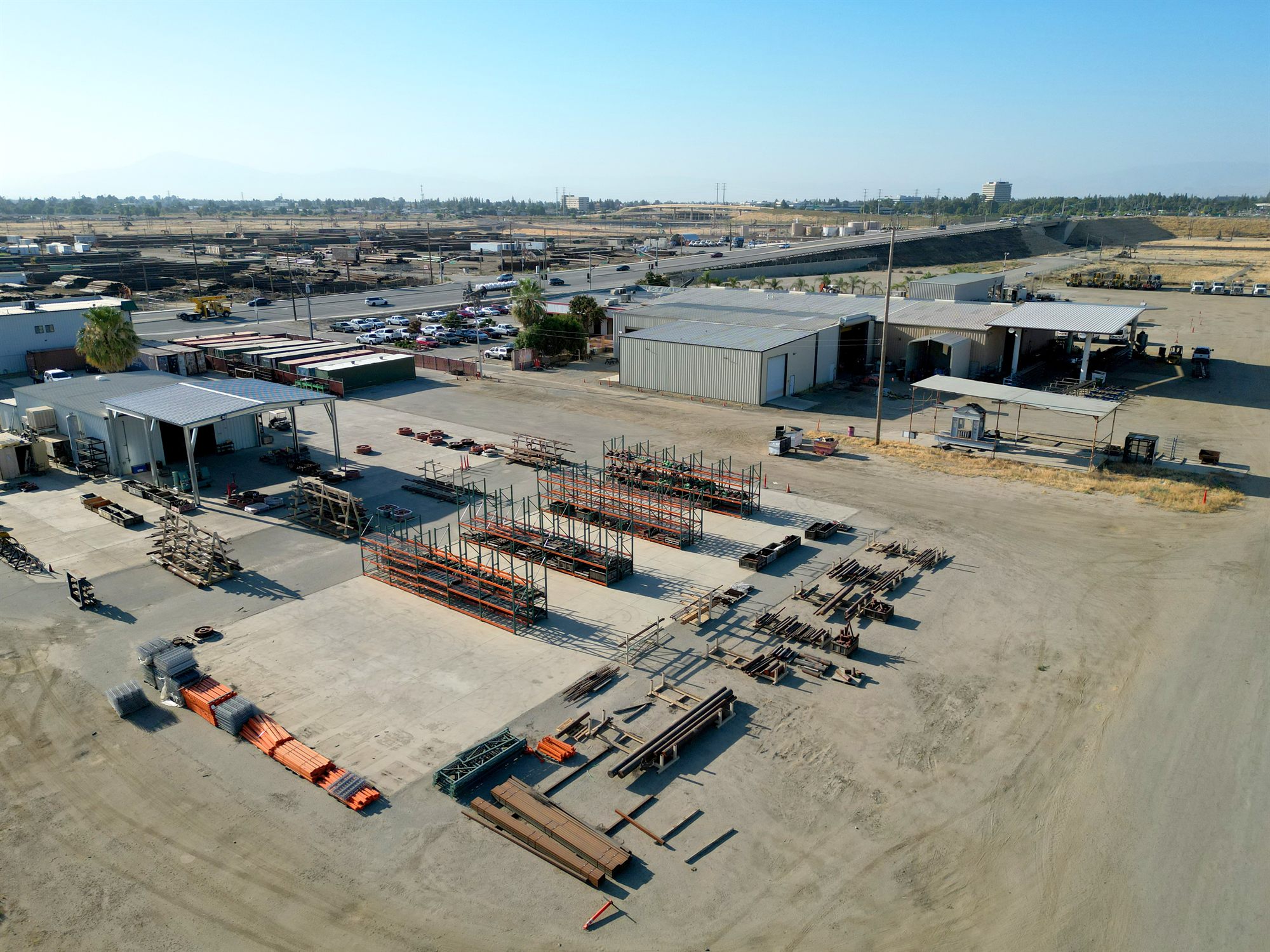
No deed, no price and no broker: how Bakersfield’s converted oil refinery moved from public shareholders to the people who financed and built it.
The Rosedale Highway renewable diesel refinery at 6451 Rosedale Highway in Bakersfield, Kern County, California, changed hands through bankruptcy, not a sale. Global Clean Energy Holdings’ Chapter 11 plan took effect Aug. 11, 2025. It cancelled the company’s stock and gave its term-loan lenders all new common units and 44.4% of preferred units. Contractor CTCI Americas received 55.6% of preferred units. The roughly 600-acre former crude refinery now runs as Central Valley Renewable Fuels.
Key takeaways
- Global Clean Energy Holdings filed Chapter 11 on April 16, 2025, with $100 million of new-money debtor-in-possession (DIP) financing from its term-loan lenders and CTCI Americas.
- The court confirmed the plan July 28, 2025, and it took effect Aug. 11, 2025. Old common stock was cancelled, and the company became Grapevine Energy Holdings, LLC.
- CTCI Americas, the contractor whose construction contract (at least $275 million after a 2023 amendment) was terminated for default in October 2024, received 55.6% of the new preferred equity.
- The plant began selling renewable diesel in December 2024 with a stated design capacity of up to about 210 million gallons a year. That was roughly three years after the late-2021 target set when the refinery was bought for $40 million in 2020.
- Average California Low Carbon Fuel Standard (LCFS) credit prices fell to $60.44 per metric ton in 2025 from $63.79 in 2024, per IETA, a reminder that this kind of plant’s value rides on policy credits.
Deal at a glance
| Item | Detail |
|---|---|
| Property | Central Valley Renewable Fuels facility (formerly Bakersfield Renewable Fuels; earlier the Alon Bakersfield Refinery) |
| Address | 6451 Rosedale Highway, Bakersfield, CA 93308 (unincorporated Kern County) |
| Property type and zoning | Heavy industrial refinery; M-3 PD (Heavy Industrial, Precise Development Combining) |
| Land | About 600 acres (2012 state water board order); 500-plus acres (Grapevine) |
| Transaction type | Chapter 11 debt-for-equity reorganization; no asset sale |
| New owners | Grapevine Energy Holdings, LLC (formerly Global Clean Energy Holdings), held by term-loan lenders led by OIC and by CTCI Americas, Inc. |
| Prior owner | Global Clean Energy Holdings, Inc. public shareholders (stock cancelled) |
| Price | None. Claims converted to equity; $100 million new-money DIP during the case |
| Key dates | Filed April 16, 2025; confirmed July 28, 2025; effective Aug. 11, 2025 |
| Court | U.S. Bankruptcy Court, Southern District of Texas, Case No. 25-90113 |
| Brokers | None (court-supervised reorganization) |
| Use | Renewable diesel refinery, design capacity up to about 210 million gallons a year |
What happened to the Rosedale Highway renewable diesel refinery?
Global Clean Energy Holdings (GCEH), owner of the converted refinery, filed Chapter 11 on April 16, 2025, in the U.S. Bankruptcy Court for the Southern District of Texas. It entered court with a restructuring support agreement signed by Vitol Americas Corp., its revolving lender; an ad hoc group holding about 96% of its term loans; and CTCI Americas, Inc. The term-loan lenders and CTCI put up “an additional $100 million” of new-money DIP financing, the company said.
The court confirmed the plan July 28, 2025, and it took effect Aug. 11, 2025, according to GCEH’s Form 8-K. Existing common stock was “cancelled, discharged and of no further force and effect.” GCEH converted into Grapevine Energy Holdings, LLC, and said it would deregister its stock with the U.S. Securities and Exchange Commission (SEC).
The plan said the company “will continue its day-to-day operations substantially as currently conducted.” On Aug. 12, 2025, Grapevine announced its emergence. It described itself as “privately held by the Senior Lenders, led by OIC, and CTCI Americas, Inc.,” with more than $60 million in exit financing, contract support and working capital.
Who ended up with the company?
| Holder | New preferred units | New common units |
|---|---|---|
| Term-loan lenders | 44.4% | 100% |
| CTCI Americas, Inc. | 55.6% | None |
| Former GCEH shareholders | None | None (stock cancelled) |
Source: Global Clean Energy Holdings Form 8-K, filed Aug. 12, 2025.
Is a debt-for-equity reorganization a sale?
No. Most property changes hands with a deed, a price and a recorded transfer tax. This one did not. The refinery stayed in the same operating subsidiary. What changed was who owns the parent: the lenders and the contractor swapped their claims for equity, and the public shareholders were wiped out.
That happens when debts exceed what the business is worth. A sale would have paid creditors in cash, probably at a discount. A reorganization lets them keep the plant running and wait for its value to grow. The $100 million DIP loan kept the plant funded during the case, and the plan settled liens and contract claims rather than a foreclosure sale.
For a buyer or appraiser, the lesson is that there is no comparable sale here. The $40 million paid for the refinery in 2020 and the much larger sums spent converting it show how far a special-purpose plant’s cost can drift from its market value.
Property tax can still move. In California, a change in control of a company that owns real estate can trigger reassessment even when no deed is recorded. Our Prop 13 reassessment explainer covers the general rules.
What is the site at 6451 Rosedale Highway?
The refinery sits at 6451 Rosedale Highway (State Route 58) in unincorporated northwest Bakersfield, with Brimhall Road as a listed cross street. It is zoned M-3 PD, Heavy Industrial Precise Development Combining, per state CEQA records. A 2012 cleanup and abatement order from the Central Valley Regional Water Quality Control Board described the site as “approximately 600 acres” with capacity of about 70,000 barrels of crude oil a day. Grapevine calls it a “500+ acre” facility.
The order traces the plant to Mohawk Oil Company in 1932, followed by Reserve Oil and Gas, Getty Oil, Texaco, Equilon and Shell. Big West of California, a Flying J subsidiary, bought it in 2005 and Alon in 2010. Refining stopped in February 2009 and restarted under Alon in June 2011.
The site also carries an environmental history. The 2012 order addressed petroleum hydrocarbons and other chemicals, including MTBE, in soil and groundwater, and required cleanup and monitoring. Obligations like that generally stay with the land and its owner, which is one reason refinery sites tend to stay industrial. For the failed 2014 crude-by-rail expansion, see our Approvals story on the site. Our guide to industrial zoning in Bakersfield and Kern County explains what M-3 allows.
How did the conversion and the CTCI dispute unfold?
GCEH bought Alon Bakersfield Properties from Delek US Holdings in May 2020 for $40 million in cash. It planned 18 to 20 months of retooling and completion in “late 2021,” according to its announcement. It said the refinery “already has a significant portion of the necessary equipment in place.”
In May 2021, its subsidiary Bakersfield Renewable Fuels (BKRF) hired CTCI Americas under a turnkey contract with a guaranteed maximum price. By January 2023 that price stood at about $205.1 million. Amendment No. 2 raised it to at least $275 million, pending settlement of change orders, and moved substantial completion to March 31, 2023, an 8-K shows. The amendment also deferred payments into 18 monthly installments with interest and sent disputed change orders toward negotiation, mediation and arbitration.
The deadline passed. On Oct. 21, 2024, BKRF notified CTCI of defaults “not capable of cure,” terminated further work, took over completion and said it would draw on CTCI’s letter of credit, per a later 8-K. On Dec. 20, 2024, the company said the plant was “commercially operational, producing approximately 250,000 gallons of renewable diesel daily,” with design capacity of up to about 210 million gallons a year. It sold through an offtake agreement with Vitol.
The contractor fought back. Bondoro, a case-tracking site summarizing court filings, says CTCI recorded a mechanic’s lien of about $924.3 million against the facility on Dec. 2, 2024, and filed to foreclose. Other case summaries put CTCI’s claim at a slightly different figure. A mechanic’s lien clouds title until it is paid, bonded or resolved. The Chapter 11 plan resolved the dispute by making CTCI the largest holder of preferred equity. Stretto’s case summary also cites the Dec. 31, 2024, expiration of the federal biodiesel blenders’ tax credit among the pressures on the company.
Who owns the refinery now?
Grapevine Energy Holdings owns it through its operating company. The California Air Resources Board’s pathway summary names the plant operator Central Valley Renewable Fuels, LLC, “formerly known as Bakersfield Renewable Fuels.” On March 26, 2026, CARB certified carbon intensity scores for renewable diesel made there from soybean oil, canola oil, distillers’ corn oil, used cooking oil and animal fats, effective from Oct. 1, 2025.
The new owners are investing. In 2026, Kern County processed ministerial site plans for a 99.9 MMBtu/hr steam boiler and other equipment at the plant, covered in our Approvals story. No 2026 production figure has been published.
What does the refinery say about energy-transition industrial property?
Kern’s crude refining base is now small. The U.S. Energy Information Administration’s capacity report lists Kern Oil & Refining at 26,000 barrels per calendar day, San Joaquin Refining at 15,000 and Talley Asphalt Products at 1,700 as of Jan. 1, 2026. The Rosedale Highway site alone once handled about 70,000 barrels a day. For another refinery-adjacent land deal, see our story on San Joaquin Refining’s purchase at 3801 Standard Street.
Reusing the site kept heavy-industrial land in heavy-industrial use. Because a refinery is an allowed use in M-3, Kern handled the 2026 equipment upgrades at staff level, with no hearing. Land with that kind of entitlement is hard to replace, which is why energy companies keep recycling it.
The risk sits in the economics. Renewable diesel earns money from fuel sales plus LCFS credits. Average credit prices fell to $60.44 per metric ton in 2025 from $63.79 in 2024, and renewable diesel’s share of credits slipped to 34% from 39%, according to IETA. When a plant’s value rests on policy credits and a contractor’s schedule, lenders can end up owning it. Our guide to the Low Carbon Fuel Standard in Kern County explains how the credits work.
For neighbors and nearby owners, continuity is the takeaway. The plant kept running through the case, and the 2026 upgrades point to a long-term operator. Contractors, fabricators and environmental service firms that serve it support demand for yards and shop space along Rosedale Highway and in Oildale.
What happens next?
- Less disclosure: GCEH said it would deregister its stock, so expect few SEC reports. State permits and CARB records become the main public window into the plant.
- Equipment work: Building, fire and air permits for the 2026 boiler and vapor control projects.
- Credit prices: LCFS and federal incentives will shape margins and feedstock choices.
- Crude refiners: Pipeline and crude-supply news affects Kern’s crude refiners, not this plant, which runs on vegetable oils and fats.
Frequently asked questions
Who owns the Rosedale Highway renewable diesel refinery now?
Grapevine Energy Holdings, LLC, the successor to Global Clean Energy Holdings, owns it through its operating company, Central Valley Renewable Fuels, LLC. Since the Chapter 11 plan took effect Aug. 11, 2025, term-loan lenders led by OIC hold all new common units and 44.4% of preferred units. Contractor CTCI Americas holds the other 55.6% of preferred units.
Was the Bakersfield renewable diesel refinery sold?
No. No deed, price or broker was involved. Global Clean Energy Holdings reorganized in Chapter 11, cancelled its stock and gave new equity to its lenders and its construction contractor in exchange for their claims. The plant stayed in the same operating subsidiary, and the company said operations would continue substantially as before.
Why did Global Clean Energy Holdings file for bankruptcy?
The conversion of the former crude refinery ran years late and over budget. Completion was targeted for late 2021, but first renewable diesel arrived in December 2024. The owner terminated the construction contract for default in October 2024, the contractor recorded a large mechanic’s lien, and the company filed Chapter 11 in April 2025 with a deal to convert debt to equity.
What was CTCI Americas’ role at the refinery?
CTCI Americas was the turnkey engineering, procurement and construction contractor hired in May 2021 to convert the plant to renewable diesel. Its guaranteed maximum price rose to at least $275 million in 2023. After the owner terminated the contract in October 2024, the Chapter 11 plan made CTCI the largest holder of the company’s new preferred equity.
How big is the refinery site and how is it zoned?
A 2012 state water board order puts the site at about 600 acres, while owner Grapevine Energy calls it a 500-plus-acre facility. It lies in unincorporated Kern County, zoned M-3 PD (heavy industrial with a precise development overlay), where a refinery is an allowed use.
How much renewable diesel does the Bakersfield plant make?
In December 2024 the company said it was producing about 250,000 gallons a day, against a design capacity of up to about 210 million gallons a year. No 2026 production figure has been published. CARB certified the plant’s carbon intensity scores for five feedstocks on March 26, 2026.
Own or lease industrial property along Rosedale Highway or in Oildale, or need yard and shop space near Kern’s energy plants? Call Kern CRE at 855-KERN-CRE (855-537-6273) or contact us. Get Kern County CRE news monthly: subscribe to the Kern CRE report.
Sources
- Form 8-K: plan effective date and emergence from Chapter 11, U.S. SEC (Global Clean Energy Holdings, Inc.), filed Aug. 12, 2025.
- Form 8-K Exhibit 99.1: press release on Chapter 11 filing and restructuring support agreement, U.S. SEC (Global Clean Energy Holdings, Inc.), April 2025.
- Form 8-K: termination of EPC agreement with CTCI Americas, U.S. SEC (Global Clean Energy Holdings, Inc.), filed Oct. 25, 2024.
- Amendment No. 2 to EPC agreement with CTCI Americas (Form 8-K), Global Clean Energy Holdings via OTC Markets, Jan. 17, 2023.
- Grapevine Energy (f/k/a Global Clean Energy) Announces Successful Completion of its Financial Restructuring, Grapevine Energy via Business Wire, Aug. 12, 2025.
- Global Clean Energy Holdings Delivers First Renewable Diesel from Bakersfield Renewable Fuels Facility, Global Clean Energy Holdings via Business Wire, Dec. 20, 2024.
- Global Clean Energy Holdings, Inc. Announces Acquisition of Bakersfield Refinery, Global Clean Energy Holdings via GlobeNewswire, May 8, 2020.
- Cleanup and Abatement Order R5-2012-0701, Bakersfield Refinery, Central Valley Regional Water Quality Control Board, May 3, 2012.
- LCFS Tier 2 Pathway Application B0940, Central Valley Renewable Fuels, LLC (summary), California Air Resources Board, certified March 26, 2026.
- Site Plan Review 139, Map 102, SCH 2026070361, CEQAnet (State Clearinghouse), July 9, 2026.
- Downstream operations, Grapevine Energy Holdings.
- September 2026 California Low Carbon Fuel Standard at a Glance (Business Brief), IETA, September 2026.
- Refinery Capacity Report, Table 3: Capacity of Operable Petroleum Refineries by State as of January 1, 2026, U.S. Energy Information Administration, 2026.
- Case Summary: Global Clean Energy Chapter 11, Bondoro, 2025.
- Global Clean Energy Holdings Files Chapter 11 with $2.1 Billion Restructuring Plan, Stretto (chapter11cases.com), April 19, 2025.
About this article
Kern CRE prepared this article with help from AI research and writing tools. An editor reviewed the draft, checked its facts against the sources linked above and edited it for accuracy and clarity. Details come from public records and the sources cited; unless stated, Kern CRE and ASU Commercial were not involved in the transaction or project.