
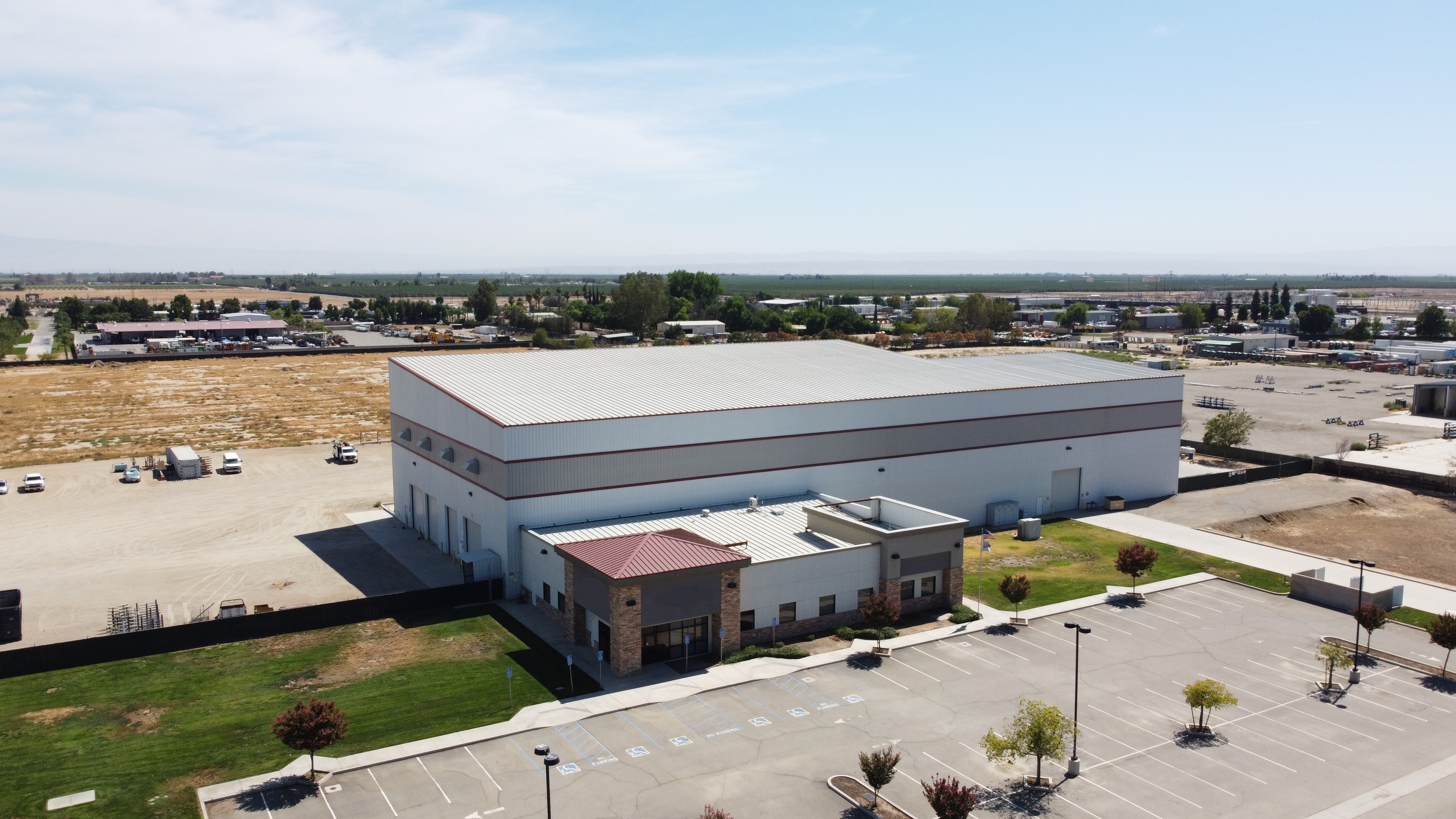
California’s Warehouse Quotas law has applied to large distribution centers since 2022. Here is who it covers, what it requires, how it has been enforced and how it shapes building design in Kern County.
The AB 701 warehouse quota law is California’s rule for productivity quotas at large distribution centers. Since Jan. 1, 2022, employers with 100 or more workers at one warehouse distribution center, or 1,000 or more statewide, must disclose quotas in writing and keep quotas from blocking meal, rest or bathroom breaks. The Labor Commissioner enforces it, and it remains in effect.
AB 701 at a glance
| Item | Detail |
|---|---|
| Law | Assembly Bill 701, Chapter 197, Statutes of 2021 (the Warehouse Quotas law); Labor Code sections 2100 to 2112 |
| Signed / effective | Sept. 22, 2021 / Jan. 1, 2022 |
| Covered employers | 100 or more employees at a single warehouse distribution center, or 1,000 or more at one or more centers in California |
| Covered facilities | General warehousing and storage (NAICS 493110), merchant wholesalers (423 and 424) and electronic shopping and mail-order houses (454110); farm product warehousing (493130) is excluded |
| Key requirements | Written description of each quota; no quotas that block meal, rest or bathroom breaks or safety compliance; work speed records; data on request |
| Enforced by | Labor Commissioner; employees through civil actions and Private Attorneys General Act (PAGA) claims; public prosecutors |
| Largest action | $5,901,700 in citations against Amazon for 59,017 violations at two Inland Empire warehouses (June 18, 2024) |
| Status | In effect |
| Related laws | SB 947 limits on automated discipline (July 1, 2027) and AB 1331 workplace surveillance limits |
Key takeaways
- AB 701 has applied since Jan. 1, 2022 to employers with 100 or more employees at a single California warehouse distribution center or 1,000 or more statewide.
- Covered employers must give workers a written description of each quota, including the number of tasks or items required in a set period.
- A quota cannot stop workers from taking meal or rest periods, using the bathroom or following health and safety laws.
- On June 18, 2024, the Labor Commissioner cited Amazon $5,901,700 for 59,017 notice violations at its Moreno Valley and Redlands warehouses, at $100 each.
- Discipline within 90 days of a worker’s quota data request or complaint is presumed to be retaliation, unless the employer rebuts it.
What is the AB 701 warehouse quota law?
AB 701 is California’s law on productivity quotas in large warehouses. Gov. Gavin Newsom signed it Sept. 22, 2021, and it took effect Jan. 1, 2022 as Labor Code sections 2100 to 2112, according to McGuireWoods. The California Labor Commissioner’s Office calls it the Warehouse Quotas law.
The law does not ban quotas. It makes them transparent and keeps them from overriding break and safety rules. A quota is a work standard that sets a productivity speed, or a fixed amount of tasks or materials per period, with possible discipline for falling short, per McGuireWoods.
Which employers and warehouses does AB 701 cover?
A facility is covered only if it meets two tests: an employee count and an industry code. The employer must directly or indirectly control the wages, hours or working conditions of 100 or more employees at one warehouse distribution center, or 1,000 or more at one or more centers in California. Workers supplied by temporary services or staffing agencies count, according to the Labor Commissioner’s FAQ and the chaptered text. Protections run to nonexempt employees.
| NAICS code | Industry | Covered? |
|---|---|---|
| 493110 | General warehousing and storage | Yes |
| 423 | Merchant wholesalers, durable goods | Yes |
| 424 | Merchant wholesalers, nondurable goods | Yes |
| 454110 | Electronic shopping and mail-order houses | Yes |
| 493130 | Farm product warehousing and storage | No, expressly excluded |
| Other 493 codes, such as 493120 refrigerated warehousing | Refrigerated and other specialized warehousing | Not listed in the definition |
The code list matters in Kern County, where much storage space serves agriculture. A general warehouse, a wholesale distributor or an e-commerce fulfillment center with enough employees falls inside the law. Farm product warehousing is excluded, and the definition names only code 493110 among the 493 warehousing codes, so refrigerated warehousing (493120) is not listed.
One caveat: the federal government retired NAICS code 454110 in its 2022 revision. Classification turns on a facility’s actual activity, not only its code.
What does AB 701 require employers to do?
Covered employers must describe each quota in writing, protect breaks and be ready to hand workers their own speed data. The table below summarizes the core duties.
| Requirement | What it means in practice |
|---|---|
| Written quota description | Each worker gets a written description of every quota, including the tasks or items per period and the adverse action that can follow a miss. It is due at hire; existing workers were due theirs in early 2022. |
| Breaks protected | No quota may block meal periods, rest periods, bathroom use (including reasonable travel time) or occupational safety and health compliance. |
| Break time not counted against workers | Time on breaks and bathroom use counts as productive time for quota purposes. |
| Work speed data | Employers must be able to produce a worker’s own work speed data on request. |
| Data on request | Current and former workers may ask for the quota description and their most recent 90 days of work speed data. The employer must respond within 21 calendar days. |
| Anti-retaliation | Discipline within 90 days of a request or complaint is presumed retaliatory, subject to rebuttal. |
The written description must be specific. Epstein Becker Green, writing in the National Law Review, described it as covering each quota, “including the number of tasks to be performed, or materials to be produced or handled.” A vague reference to performance standards invites citations. So does a system that ranks workers against each other without telling them what the numbers are.
How is the AB 701 warehouse quota law enforced?
The Labor Commissioner enforces AB 701, and workers can sue or bring PAGA claims. The largest public action so far came June 18, 2024, when the Labor Commissioner cited Amazon $5,901,700 for 59,017 violations at warehouses in Moreno Valley and Redlands, covering Oct. 20, 2023 to March 9, 2024.
The office found that Amazon’s peer-to-peer evaluation system worked as an undisclosed quota. It assessed $100 per violation. Labor Commissioner Lilia García-Brower said in the release: “The peer-to-peer system that Amazon was using in these two warehouses is exactly the kind of system that the Warehouse Quotas law was put in place to prevent.”
The citations covered notice failures. They show that a disclosure gap alone can produce large totals when multiplied across workers and pay periods. The law also ties oversight to injury data: under the chaptered text, a center with an injury rate at least 1.5 times the warehousing industry average draws Labor Commissioner follow-up.
What related laws affect warehouse quotas in 2026 and 2027?
Several newer laws overlap with how distribution centers set and enforce productivity standards.
- SB 947, the No Robo Bosses Act: Starting July 1, 2027, employers may not rely solely on an automated decision system to discipline or fire workers. They must have a human verify the output and notify affected employees afterward, according to Ogletree Deakins. Automated productivity scoring is squarely in view.
- AB 1331: This workplace surveillance law bars employers from using monitoring tools in bathrooms, with limited exceptions. Civil penalties run up to $500 per violation, enforceable through PAGA, per the same Ogletree summary.
- Cal/OSHA indoor heat rule: Since July 23, 2024, warehouses that reach 82 F must provide cool-down rest. Our indoor heat rule guide covers how pace expectations must account for heat controls.
- Workplace violence prevention (SB 553): Since July 1, 2024, most employers need a written plan, which interacts with security and access design in large buildings.
For the wider picture, see our guide to California employment laws for Kern County employers.
How does AB 701 affect distribution centers in Kern County?
AB 701 applies to any Kern County distribution center that meets the headcount and industry-code tests, and the county is adding large users. The City of Bakersfield announced Sept. 16, 2026 that Ross Stores selected southeast Bakersfield for a 1.75 million-square-foot processing and distribution center. It is expected to create nearly 1,000 jobs, with groundbreaking expected in 2027, BakersfieldNow reported. Whether any specific facility is covered depends on its classification and headcount. Centers of that scale are the kind of operation the law targets. See our look at the Ross distribution center.
The market is absorbing space. A national brokerage report counted 1,499,945 square feet of positive net absorption in Bakersfield buildings of 50,000 square feet or more in Q2 2026, and a national Q2 2026 report named California’s Central Valley among three U.S. markets with the highest net absorption growth rates. A Q2 2026 Bakersfield industrial report put metro unemployment at 8.5 percent, a deeper labor pool than many coastal markets.
Building design: restrooms, break rooms and travel time
Because bathroom use and reasonable travel time cannot be held against a quota, the distance between work zones and restrooms becomes an operating cost in very large buildings. Distributed restroom cores, multiple break rooms and clear walking routes cut lost minutes. Break rooms can also serve as heat-rule cool-down areas.
For tenants, the practical read is that restroom counts and locations, break room capacity and shift-change parking all matter before signing, and tenant improvement dollars can cover shortfalls in the shell. Our guide on how much warehouse space you need covers sizing the building itself.
For landlords and investors
AB 701 obligations fall on the employer, not the property owner. Still, buildings with well-distributed restrooms, power for break room cooling and room for staff amenities are easier to lease to large operators. Older big-box buildings may need upgrades to compete. Underwriting a distribution center tenant often includes a look at its labor practices and any pending wage or PAGA claims.
AB 701 compliance checklist for distribution center operators
- Determine whether each site meets the 100-employee (single site) or 1,000-employee (statewide) threshold and falls within a covered NAICS code.
- Write a plain-language description of every quota, including the numbers per period and the consequences. Give it at hire and keep it current.
- Audit any ranking, peer comparison or algorithmic scoring for undisclosed quotas.
- Make sure quota math treats meal, rest and bathroom time, including travel time, as productive time.
- Keep individual and aggregated work speed data, and set up a process to answer worker requests for the most recent 90 days promptly.
- Train supervisors on the 90-day retaliation presumption.
- Plan for SB 947 human review and notices before July 1, 2027, and review monitoring tools under AB 1331.
- In site selection, weigh restroom and break room distribution, heat controls and parking against projected headcount.
Illustrative example: how restroom placement affects quota time
These figures are illustrative only, not data from any facility. They assume a walking speed of 3 miles per hour (about 4.4 feet per second) with no congestion. They show how layout drives the travel time AB 701 says cannot be counted against a worker.
In a deep building with restrooms only at the front office wall, a worker at the back may walk 600 feet each way. A mid-building restroom core cuts the worst-case walk to 300 feet, and distributed cores can cut it to about 150 feet. With two restroom trips per shift, worst-case walking time falls from about 9 minutes to about 2.3 minutes as cores are added. Multiplied across hundreds of workers and every shift, that is a real productivity and design question for operators and the landlords who build for them.
| Layout | Worst-case one-way walk | Round trip | Two trips per shift |
|---|---|---|---|
| Restrooms at front wall only | 600 ft | About 4.5 minutes | About 9 minutes |
| One mid-building restroom core | 300 ft | About 2.3 minutes | About 4.5 minutes |
| Distributed restroom cores | 150 ft | About 1.1 minutes | About 2.3 minutes |
Frequently asked questions
What is AB 701 in California?
AB 701 is California’s Warehouse Quotas law, effective Jan. 1, 2022. Large warehouse distribution center employers must give workers written descriptions of productivity quotas. The law bars quotas that block meal, rest or bathroom breaks, and it lets workers request their quota details and recent work speed data. The Labor Commissioner enforces it, and workers can also sue or file PAGA claims.
Which warehouses are covered by AB 701?
Coverage starts with headcount: 100 or more employees at one center, or 1,000 or more across California, with staffing agency workers counted. The facility must also fall under a listed industry code. Those are general warehousing (493110), durable and nondurable goods wholesalers (423, 424) and electronic shopping and mail-order houses (454110). Farm product warehousing is excluded.
Does AB 701 ban warehouse quotas?
No. The law allows quotas but regulates them. Each quota must be disclosed in writing, with the number of tasks or items per period and the consequences of missing it. A quota cannot get in the way of legally required breaks, bathroom use with reasonable travel time, or safety rules.
Can warehouse workers request their productivity data under AB 701?
Yes. Current and former employees can ask for their quota descriptions and a copy of their own work speed data for the past 90 days. Employers have 21 calendar days to respond. Discipline within 90 days of a request or complaint is presumed retaliatory unless the employer rebuts it.
Why was Amazon fined under AB 701?
The Labor Commissioner cited Amazon on June 18, 2024 for 59,017 violations at its Moreno Valley and Redlands warehouses. Investigators said a peer-to-peer evaluation system acted as a quota, and workers never received the required written notice. The fine totaled $5,901,700, at $100 per violation.
Does AB 701 apply to farm product warehouses and cold storage?
Farm product warehousing (NAICS 493130) is expressly excluded. Refrigerated warehousing (493120) is not among the listed codes. General warehousing, wholesale distribution and e-commerce fulfillment can be covered if they meet the headcount tests. Coverage depends on what the facility actually does, and an employment attorney can say whether a given Kern County agricultural or cold storage operation is covered. Our cold storage guide covers the sector.
Do landlords have obligations under AB 701?
No. The duties fall on employers that run covered distribution centers, not on property owners. Landlords still feel the effects, because operators want enough well-placed restrooms, break rooms and parking to keep travel time and shift changes manageable. Owners of large buildings may find that these features, and tenant improvement budgets to add them, help with leasing.
If you are planning a Kern County distribution center and want to weigh layout, labor and lease terms together, call Kern CRE at 855-KERN-CRE (855-537-6273) or contact us. Get Kern County CRE news monthly: subscribe to the Kern CRE report.
Sources
- California AB 701 (2021), Chaptered text (Chapter 197, Statutes of 2021), LegiScan, Sept. 22, 2021.
- Frequently Asked Questions on Warehouse Quotas (Assembly Bill 701), California Department of Industrial Relations, Division of Labor Standards Enforcement.
- California Enacts New Law Targeting Warehouse Distribution Center Production Quotas, McGuireWoods, September 2021.
- California Passes Law Marking a Dramatic Shift in Warehouse Worker Quotas, Epstein Becker Green via National Law Review, Sept. 29, 2021.
- News Release 2024-46: Labor Commissioner cites Amazon for violating Warehouse Quotas law, California Department of Industrial Relations, June 18, 2024.
- California SB 947 (2025-2026): Employment: automated decision systems, LegiScan, Sept. 30, 2026.
- California AB 1331 (2025-2026): Workplace surveillance, LegiScan, Sept. 30, 2026.
- California Governor Signs 3 Bills Targeting AI and Workplace Surveillance, Ogletree Deakins, Oct. 1, 2026.
- Title 8, Section 3396: Heat Illness Prevention in Indoor Places of Employment, California Department of Industrial Relations, operative July 23, 2024.
- Ross Stores, Inc. to build processing and distribution center in southeast Bakersfield, BakersfieldNow (KBAK), Sept. 16, 2026.
- South Central Valley Industrial Figures Q2 2026, CBRE, Aug. 3, 2026.
- Q2 2026 U.S. Industrial & Logistics Market Report, CBRE, July 29, 2026.
- Bakersfield Industrial MarketBeat Q2 2026, Cushman & Wakefield, Q2 2026.
About this article
Kern CRE prepared this article with help from AI research and writing tools. An editor reviewed the draft, checked its facts against the sources linked above and edited it for accuracy and clarity. It is general information, not legal, tax, investment or financial advice; talk with a qualified professional about your situation.