
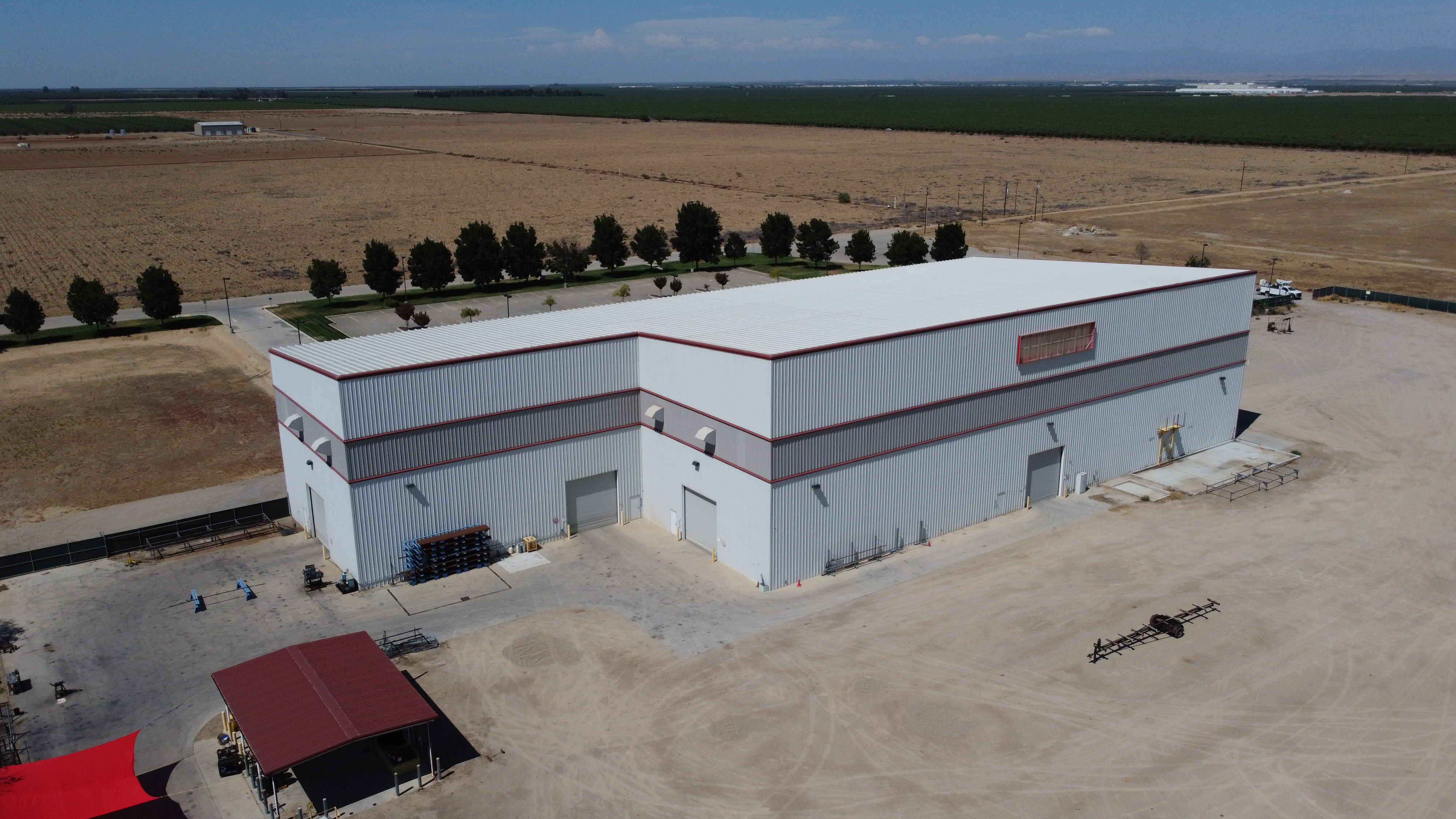
How a cost segregation study turns part of a warehouse or plant into faster write-offs, what the 2025 federal tax law changed and why California runs on a different schedule.
Cost segregation for industrial property is an engineering-based tax study that splits a building’s cost into components with shorter depreciation lives, such as dock equipment, process electrical and site paving, instead of depreciating everything over 39 years. Under the 2025 federal tax law, short-life components acquired after Jan. 19, 2025 qualify for permanent 100% bonus depreciation in year one.
Key takeaways
- A cost segregation study moves parts of an industrial building from 39-year property into 5-, 7- and 15-year property, which pulls depreciation deductions forward.
- The 2025 federal tax law (Public Law 119-21) permanently restored 100% bonus depreciation for qualified property acquired after Jan. 19, 2025. Short-life components can often be written off in the year the building is placed in service.
- Owner-users who manufacture, process or refine products may also qualify for the new 100% deduction on qualified production property. A landlord leasing to a manufacturer does not.
- California generally does not follow federal bonus depreciation or the higher Section 179 limits, so your state schedule will be slower than your federal one.
What is cost segregation, and how does it work on an industrial building?
Cost segregation reclassifies parts of a building so they depreciate faster. The IRS depreciates a warehouse over 39 years as nonresidential real property, and land is not depreciable at all. Without a study, most owners put the entire building cost on that 39-year schedule.
A study, usually prepared by an engineer or a specialist firm working with your CPA, breaks the purchase price or construction cost into individual assets. The IRS’s Cost Segregation Audit Techniques Guide describes the process as allocating total property costs into the proper property classes and recovery periods. Components that serve your equipment or the site, rather than the building structure, can move to 5-, 7- or 15-year lives.
You do not get more total depreciation. You get it sooner, which is worth real money when the tax savings can go back into the business or the next acquisition.
What parts of a warehouse or industrial building can be reclassified?
Industrial buildings are mostly structure. The slab, walls, roof and core building systems stay at 39 years. The opportunity is usually in site work and in anything installed to serve the operation rather than the building. Your study determines the actual classification of each item.
| Category | Recovery period (federal) | Industrial examples | Bonus eligible? |
|---|---|---|---|
| Personal property (Section 1245) | 5 or 7 years | Dock levelers and seals, dedicated process electrical and plumbing, removable office finishes, signage, some security and equipment-related items | Yes |
| Land improvements | 15 years | Truck court and parking paving, curbs, fencing and gates, site lighting, storm drainage, landscaping | Yes |
| Qualified improvement property | 15 years | Later interior improvements to a nonresidential building, excluding enlargements, elevators and internal structural framework | Yes |
| Building (Section 1250) | 39 years | Foundation and slab, structural walls, roof, building HVAC, general lighting and plumbing | No |
| Land | Not depreciable | The ground under the building and yard | No |
How does bonus depreciation work in 2026 after the 2025 tax law?
Bonus depreciation lets you deduct a percentage of qualifying property, generally property with a recovery period of 20 years or less, in the first year. Under the 2017 law it was phasing down, to 40% in 2025 and 20% in 2026. The One Big Beautiful Bill Act, signed July 4, 2025, permanently restored 100% bonus depreciation for qualified property acquired after Jan. 19, 2025. Our 2025 tax law overview covers the wider changes.
The IRS confirmed this in Notice 2026-11, released Jan. 14, 2026 (IR-2026-06). It gives interim guidance on the permanent 100% deduction and lets taxpayers elect a reduced rate, 40% or 60% for certain longer-production property, for the first tax year ending after Jan. 19, 2025. In practice, the 5-, 7- and 15-year components of a Bakersfield warehouse bought in 2026 can usually be expensed in year one.
The acquisition date matters. Property acquired under a binding contract entered before Jan. 20, 2025 stays on the old phase-down, according to Cohen & Co., which means 20% bonus for property placed in service in 2026.
Section 179 is a separate tool
Section 179 expensing also expanded. For tax years beginning in 2026, Rev. Proc. 2025-32 sets the limit at $2,560,000, reduced dollar for dollar once qualifying purchases exceed $4,090,000. It can cover qualified improvement property plus roofs, HVAC, fire protection, alarm and security systems added to nonresidential buildings. Business income caps it, so it fits owner-users better than passive investors.
Can manufacturers expense the whole building under the qualified production property rule?
Possibly, if you own and operate the plant yourself. The 2025 law created Section 168(n), a 100% deduction for qualified production property: the part of a nonresidential building used as an integral part of manufacturing, production or refining that substantially transforms a product. Agricultural and chemical production count, which matters in Kern County’s food processing and ag-industrial base.
The rules are narrow. Construction must begin after Jan. 19, 2025 and before Jan. 1, 2029, and the property must be placed in service before Jan. 1, 2031. Offices, parking, sales, research and engineering areas do not qualify, and IRS Notice 2026-16 (February 2026) says storage of finished goods does not either. An existing building can qualify only if no one used it in a qualified production activity between Jan. 1, 2021 and May 12, 2025.
Investors should note one rule above all. Property used by a lessee is not treated as used by the owner, so a landlord leasing to a manufacturer cannot claim it. A change in use within 10 years triggers recapture. This is an owner-user tool, and it requires an election on a timely filed return. For the full rules, see our guide to qualified production property.
Does California follow federal bonus depreciation?
Generally no. The Franchise Tax Board said in its March 2026 Tax News that, in general, California law does not conform to the 2025 federal act, and California has long declined to follow federal bonus depreciation. The FTB’s 2025 instructions for Form FTB 3885 put the California Section 179 maximum at $25,000, reduced once qualifying purchases exceed $200,000. The FTB’s summary of federal income tax changes lists its position on each provision.
For a Kern County owner, that means a fast federal schedule and a slower California one. Reclassified components can still help on the state return, but the first-year effect is far smaller.
When does a cost segregation study make sense for an industrial owner?
A study costs money, and the benefit depends on your facts. These are the situations most worth pricing out:
- You recently bought, built or expanded a building, especially one with a large paved truck court, yard, fencing and site lighting.
- The building has process-related improvements, such as cold storage, food processing or manufacturing build-outs. Our cold storage guide covers those facilities.
- You plan to hold for several years, so the deferral pays off before a sale triggers recapture.
- You have taxable income the deductions can offset. Under the passive activity rules, rental losses generally offset only passive income unless you qualify as a real estate professional (IRS Publication 925).
- You are replacing a roof or another major component and want to write off the old one’s remaining basis through a partial disposition election.
What are the catches and risks?
Recapture. Depreciation reduces your basis, so it comes back when you sell. Gain on Section 1245 property is generally taxed as ordinary income to the extent of depreciation taken. Unrecaptured Section 1250 gain on real property is taxed at up to 25%. Bonus depreciation on 15-year land improvements can also create ordinary-income recapture. A 1031 exchange can defer this.
Study quality. The IRS audit guide lists the elements of a quality study, including qualified preparers, documented methodology and engineering take-offs. It tells examiners to view rule-of-thumb allocations with caution.
Land allocation. The land and building split drives everything. Many owners start from the county assessor’s land and improvement values.
Can you do a cost segregation study on a building you bought years ago?
Yes. A look-back study reclassifies components of a building placed in service in a prior year. The catch-up depreciation is generally claimed in the current year through an accounting method change on Form 3115 rather than by amending old returns. The bonus rate depends on when the building was acquired, so a warehouse bought in 2019 falls under different rules than one bought in 2026.
Example: a 40,000-square-foot Bakersfield warehouse bought in 2026
Assume an investor buys a 40,000-square-foot warehouse in Bakersfield for $5,000,000, about $125 per square foot. That is close to the $123 average sale price a regional brokerage report listed for Bakersfield industrial in Q2 2026. The contract was signed in 2026, after the Jan. 19, 2025 cutoff. Assume 25% of the price is land, leaving a $3,750,000 depreciable basis.
Assume the study allocates 6% of that basis to 5- and 7-year property (dock levelers, seals, process electrical, office finishes) and 14% to 15-year land improvements (truck court paving, fencing, site lighting, drainage). These percentages and the 37% tax rate are illustrative assumptions, not market statistics. Figures are full-year federal amounts and ignore the mid-month convention that prorates the first year of 39-year depreciation.
| Item | No study | With study and 100% bonus |
|---|---|---|
| 5- and 7-year property | $0 | $225,000 (expensed) |
| 15-year land improvements | $0 | $525,000 (expensed) |
| 39-year building | $96,154 ($3,750,000 / 39) | $76,923 ($3,000,000 / 39) |
| Year-one depreciation | $96,154 | $826,923 |
| Additional deduction from study | n/a | $730,769 |
| Federal tax deferred at an assumed 37% rate | n/a | About $270,000 |
Frequently asked questions
Is bonus depreciation 100% in 2026?
Yes, for qualified property acquired after Jan. 19, 2025. The One Big Beautiful Bill Act, signed July 4, 2025, made 100% bonus depreciation permanent, and IRS Notice 2026-11 gives interim guidance. Property acquired under a binding contract signed before Jan. 20, 2025 stays on the old phase-down, which allows 20% for property placed in service in 2026.
Does cost segregation work on a warehouse?
Yes, but a bulk warehouse usually has a smaller short-life share than a heavily improved building, because most of its cost is slab, walls and roof. The biggest items tend to be 15-year site work such as truck court paving, fencing, lighting and drainage, plus dock equipment and office finishes. Cold storage and manufacturing buildings often have more process systems to reclassify.
Can a landlord claim the new 100% deduction for qualified production property?
Generally no. Section 168(n) treats property used by a lessee as not used by the owner in a qualified production activity, so a landlord leasing to a manufacturer cannot claim it. The deduction targets owner-users who manufacture, produce or refine products in the building. Offices, parking and finished-goods storage areas are excluded, and recapture applies if the use changes within 10 years.
Does California allow bonus depreciation on real estate components?
Generally no. According to the Franchise Tax Board, California does not follow the 2025 federal law in general, and its Section 179 deduction is capped at $25,000, phasing out above $200,000 of purchases. Kern County owners should expect slower state depreciation than federal.
What happens to cost segregation deductions when I sell?
Depreciation lowers your tax basis, so it is generally recaptured on sale. Gain on Section 1245 components is taxed as ordinary income up to the depreciation taken, and unrecaptured Section 1250 gain is taxed at up to 25% federally. A 1031 exchange can defer recapture. A CPA can model the recapture before a sale.
Can I do a cost segregation study on a building I already own?
Yes. A look-back study reclassifies components of a building placed in service in an earlier year. The missed depreciation is generally claimed in the current year through an accounting method change on Form 3115, without amending prior returns. Older purchases may not qualify for 100% bonus.
If you are buying, building or holding an industrial property in Kern County, we can help you think through the acquisition side and connect you with CPAs and cost segregation specialists who work on local industrial buildings. Call Kern CRE at 855-KERN-CRE (855-537-6273) or contact us. Get Kern County CRE news monthly: subscribe to the Kern CRE report.
Sources
- Treasury, IRS issue guidance on the additional first year depreciation deduction amended as part of the One, Big, Beautiful Bill (IR-2026-06, Notice 2026-11), IRS, Jan. 14, 2026.
- Notice 2026-16: Interim Guidance on Special Depreciation Allowance for Qualified Production Property, IRS, February 2026.
- IRS issues notice on qualified production property depreciation (release date of Notice 2026-16: Feb. 20, 2026), NATP, February 2026.
- One, Big, Beautiful Bill and the Real Estate Industry, KPMG, July 2025.
- Bonus depreciation guidance provides familiar rules, PwC, January 2026.
- One Big Beautiful Bill Act Expands 100% Depreciation Expensing Opportunities, BDO, September 2025.
- IRS Provides Clarity on Bonus Depreciation for Qualified Production Property, BDO, March 2026.
- The Written Binding Contract Rule’s Impact on Bonus Depreciation in Real Estate, Cohen & Co., February 2026.
- Publication 5653, Cost Segregation Audit Techniques Guide (Rev. 2-2025), IRS, February 2025.
- 26 U.S. Code 168 (accelerated cost recovery system), Legal Information Institute, Cornell Law School.
- 26 U.S. Code 179 (election to expense), Legal Information Institute, Cornell Law School.
- Rev. Proc. 2025-32 (2026 inflation adjustments, including Section 179 limits), IRS, 2025.
- Summary of Federal Income Tax Changes, California Franchise Tax Board.
- 2025 Instructions for Form FTB 3885, California Franchise Tax Board, 2025.
- Topic no. 409, Capital gains and losses, IRS, September 2026.
- Publication 544 (2025), Sales and Other Dispositions of Assets, IRS, 2025.
- Publication 925 (2025), Passive Activity and At-Risk Rules, IRS, 2025.
- 26 CFR 1.168(i)-8, Dispositions of MACRS property (partial disposition election), Legal Information Institute, Cornell Law School.
- Cost Segregation Studies, CliftonLarsonAllen (CLA).
- What Is a Cost Segregation Study and How Does It Work?, Cherry Bekaert, March 2026.
- Regional brokerage market reports (Bakersfield industrial, July 2026).
About this article
Kern CRE prepared this article with help from AI research and writing tools. An editor reviewed the draft, checked its facts against the sources linked above and edited it for accuracy and clarity. It is general information, not legal, tax, investment or financial advice; talk with a qualified professional about your situation, and have a CPA review your facts before you rely on any of these rules.