
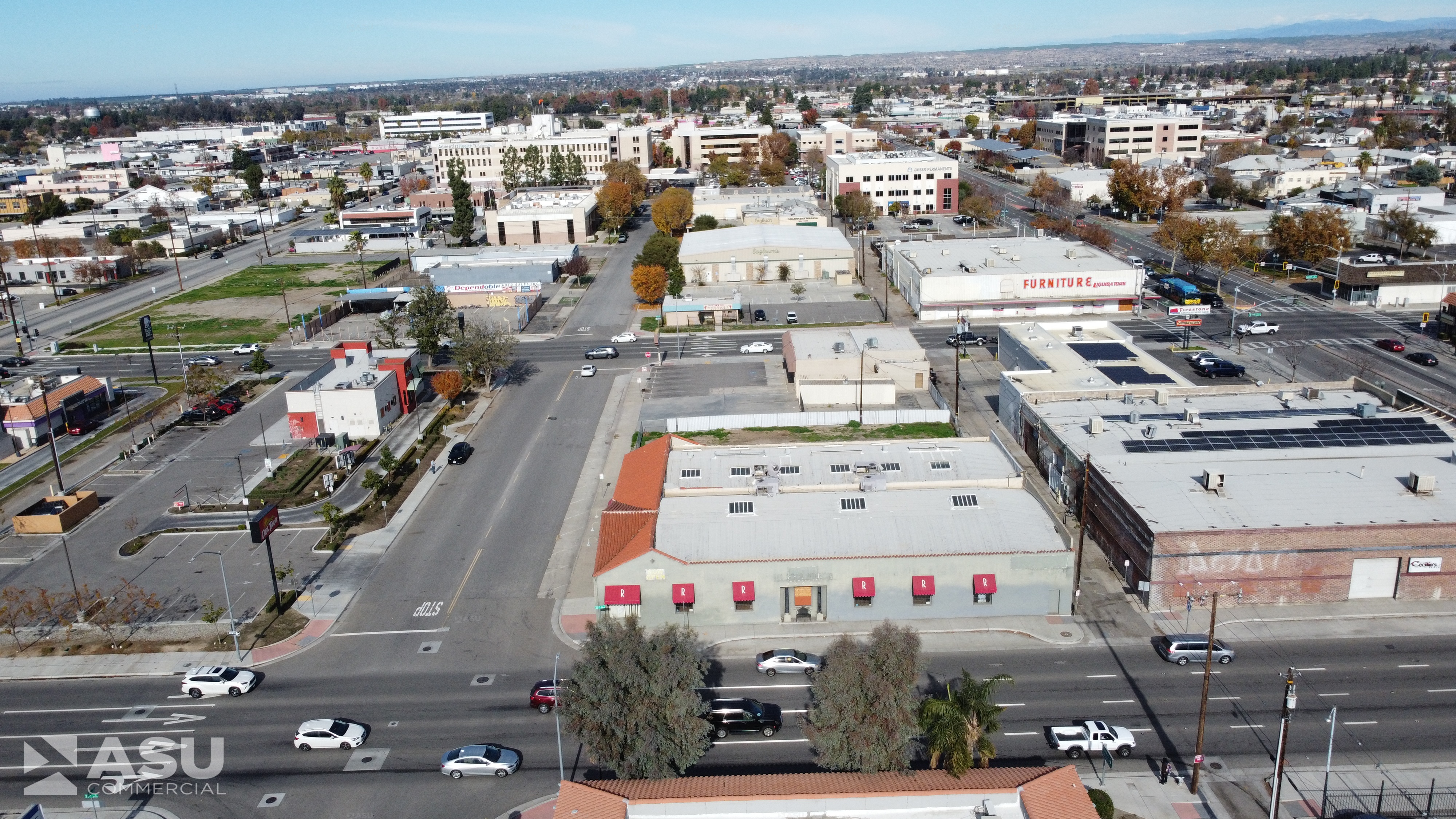
Net operating income drives value, loan size and almost every investment decision on a commercial building. Here is the formula, what belongs in it and the mistakes that inflate it.
Net operating income (NOI) is a commercial property’s total income after vacancy and operating expenses, but before mortgage payments, depreciation, capital improvements and income taxes. The formula is effective gross income minus operating expenses. NOI shows what the real estate itself earns. Investors divide it by a cap rate to estimate value.
Key takeaways
- NOI equals effective gross income minus operating expenses.
- NOI excludes debt service, depreciation and income taxes, so it measures the property’s performance regardless of who owns it or how it is financed.
- Lease structure changes NOI. Under NNN leases tenants reimburse most expenses, while under gross leases the landlord absorbs them.
- In California, underwrite property taxes at the purchase price, because Prop 13 reassesses the property on a sale.
- At a 7.25% cap rate, every $1 of NOI supports about $13.79 of value, so small errors in NOI become large errors in price.
What is net operating income?
NOI is the annual profit a property produces from operations. It starts with rent, adjusts for vacancy and other income, and subtracts the costs of running the property: property taxes, insurance, repairs, owner-paid utilities, landscaping and management.
What NOI leaves out matters just as much. California’s Property Tax Rule 8, which governs the income approach for assessors, says the costs deducted from income do not include depreciation, debt retirement or interest on funds invested in the property. Investors and lenders follow the same logic, so NOI reflects the building, not the owner’s loan or tax situation.
How do you calculate NOI step by step?
Build NOI from the top down. Use actual numbers from the rent roll and the trailing 12 months of operating statements, then adjust for anything that will change after you buy.
The NOI calculation
| Line | What it includes |
|---|---|
| Potential gross rent | Rent if every unit were leased at current rates for the full year |
| Less: vacancy and credit loss | Allowance for empty space, downtime between tenants and tenants who do not pay |
| Plus: expense reimbursements | Taxes, insurance and CAM that tenants repay under NNN or modified gross leases |
| Plus: other income | Parking, yard storage, cell tower or billboard leases, late fees |
| = Effective gross income (EGI) | Total income the property can realistically collect |
| Less: operating expenses | Property taxes, insurance, repairs and maintenance, owner-paid utilities, management, landscaping |
| = Net operating income (NOI) | Income before debt service, depreciation, capital improvements and income taxes |
What counts as an operating expense, and what does not?
Operating expenses are the recurring costs of keeping the property running and leased. Big one-time projects, financing costs and the owner’s own taxes stay out of NOI.
Replacement reserves are a judgment call. Appraisers and many buyers deduct a reserve for roofs, paving and HVAC to reach a more conservative NOI, while some sellers leave it out. Consistency is the rule. When you compare cap rates, make sure every deal treats reserves the same way. Our cap rate guide for industrial investors shows why.
Included vs. excluded from NOI
| Included in NOI | Excluded from NOI |
|---|---|
| Property taxes | Mortgage principal and interest |
| Property insurance | Depreciation and amortization |
| Repairs and routine maintenance | Owner’s income taxes |
| Owner-paid utilities and trash | Capital improvements such as a new roof |
| Landscaping, sweeping, parking lot upkeep | Tenant improvements and leasing commissions (usually shown below NOI) |
| Property management fee | Owner’s personal or business expenses run through the property |
How do lease types change NOI?
The lease decides who carries each cost. Most Kern County industrial buildings lease on a NNN or modified gross basis. Under a NNN lease, the tenant reimburses taxes, insurance and common area maintenance (CAM), so those costs show up as both income and expense and largely wash out. Under a gross lease, the landlord pays them out of rent. For the full comparison, see our guide to NNN, modified gross and full service leases.
Vacancy changes the math in multi-tenant buildings. If a unit sits empty, nobody reimburses that unit’s share of taxes and insurance, so the landlord pays it. NOI on a half-empty NNN building can therefore fall faster than rent alone suggests. Operating expense pass-throughs explains how those reimbursements work.
Who pays operating expenses, by lease type (modified gross leases vary widely)
| Expense | NNN lease | Modified gross lease | Full service gross lease |
|---|---|---|---|
| Property taxes | Tenant reimburses | Often landlord, or increases over a base year | Landlord |
| Insurance | Tenant reimburses | Varies by lease | Landlord |
| CAM and repairs | Tenant reimburses | Varies by lease | Landlord |
| Utilities and janitorial | Tenant pays directly | Usually tenant | Landlord |
| Effect on landlord NOI | Most stable | Exposed to some cost increases | Most exposed to cost increases |
Why does Prop 13 matter when you calculate NOI in California?
Because a sale can raise your tax bill sharply. Under Proposition 13, California property is taxed at 1% of assessed value plus voter-approved debt. Assessed value is generally reset to market only on a change in ownership or new construction, according to the State Board of Equalization’s Publication 29. A seller who bought 20 years ago may pay far less than a new buyer will. Our Prop 13 reassessment guide covers the mechanics.
If the building is on gross or modified gross leases, the higher tax comes out of your NOI, not the tenant’s pocket. Always replace the seller’s property tax line with an estimate based on your purchase price and the local rate on the bill.
One wrinkle affects owners appealing an assessment. Rule 8 excludes property taxes from the expenses an assessor deducts, and assessors account for taxes through the capitalization rate instead. An investor’s NOI and an assessor’s income approach are built slightly differently, so do not mix the two. A property tax consultant can advise on appeals.
How do investors and lenders use NOI?
Investors convert NOI into value with a cap rate: value = NOI / cap rate. Regional brokerage reports put the Bakersfield industrial market cap rate at 7.23% in a Q2 2026 industrial overview, so as a rough rule each $1,000 of annual NOI there supports about $13,800 of value. That figure is a CoStar-based market average, and individual deals vary.
Lenders use NOI to size loans through the debt service coverage ratio: DSCR = NOI / annual debt service. A DSCR of 1.38x means the property earns 38% more than the loan payments. Each lender sets its own minimum, so ask early. Our guide to how commercial property is valued shows where NOI fits among the valuation methods.
What NOI mistakes should buyers and sellers avoid?
A small error in NOI turns into a large error in price. These problems turn up often in offering packages and owner-prepared statements.
- Zero vacancy on a multi-tenant building. Brokerage reports put Bakersfield industrial vacancy at 9.55% in Q2 2026, so your building will not stay full forever.
- No management fee because the owner self-manages. A buyer will pay someone, so include a market fee.
- Old property taxes. Underwrite taxes at the new purchase price.
- Pro forma rent presented as actual. Separate signed leases from projected rent on vacant space.
- One-time income or free rent. Back out a one-time fee and account for concessions still being given.
- Capital costs buried in repairs. A new roof in last year’s expenses understates NOI. A roof that is due soon overstates it.
How do you verify a seller’s NOI before you buy?
Treat the NOI in a marketing package as a starting point, not a fact. In due diligence, rebuild it from source documents and make the seller’s numbers prove out. Our industrial due diligence checklist lists the wider review.
On a single-tenant NNN warehouse, this is mostly a lease review. On a multi-tenant building, expect to spend more time on reimbursements, since CAM reconciliations are where errors and under-billing tend to hide.
- Leases and amendments: Confirm rent, escalation dates, expense responsibilities and any free rent still owed.
- Rent roll vs. bank deposits: Make sure the rent being reported is actually being collected.
- Tenant estoppel certificates: Tenants confirm their rent, deposit and that the landlord is not in default.
- Trailing 12-month statements and the last two years of CAM reconciliations: Look for unbilled or disputed charges.
- Property tax bill and insurance quote: Replace the seller’s numbers with your own post-closing estimates.
- Service contracts: Landscaping, sweeping, fire sprinkler monitoring and roof maintenance agreements come with the building.
How can owners increase NOI?
In industrial, the levers are usually practical rather than clever. Move rents toward market at renewal, and add fixed annual escalations to new leases. When a gross or modified gross lease expires, consider converting it to NNN so cost increases pass through. Bill CAM accurately and on time.
Look for underused land that could earn yard storage or parking income. Many Kern County industrial parcels carry extra acreage, and industrial outdoor storage is one way to use it. Finally, shop insurance and service contracts. Every dollar of non-recoverable cost you cut flows straight to NOI.
Example: a 30,000 SF multi-tenant industrial building in Bakersfield
Assume six 5,000 SF units on NNN leases at $0.90 per SF per month, an 8% vacancy and credit loss allowance, and property taxes of about 1.1% on a purchase price near $3.86 million. All figures are illustrative assumptions for a single building, not a market survey. Kern County tax rates vary by tax rate area.
Tenants reimburse taxes, insurance, CAM and management on occupied space, so reimbursements equal recoverable expenses times 92% occupancy. The landlord also carries $6,000 of non-recoverable costs and sets aside a $6,000 replacement reserve.
NOI comes to $279,800. At a 7.25% cap rate, that supports a value of about $3.86 million. With a $2.5 million loan at an assumed 6.5% rate and 25-year amortization, annual debt service is about $202,562, for a DSCR of roughly 1.38x.
Now run the Prop 13 check. If the seller’s tax bill is $18,000 and yours will be $42,500, that $24,500 difference would come straight out of NOI on a gross-lease building. At a 7.25% cap rate, that is about $338,000 of value.
NOI build-up (annual)
| Line item | Amount |
|---|---|
| Potential gross rent (30,000 SF x $0.90 x 12) | $324,000 |
| Less vacancy and credit loss (8%) | ($25,920) |
| Plus expense reimbursements ($78,500 x 92%) | $72,220 |
| Effective gross income | $370,300 |
| Property taxes | ($42,500) |
| Insurance | ($15,000) |
| CAM, repairs and landscaping | ($12,000) |
| Property management | ($9,000) |
| Non-recoverable expenses | ($6,000) |
| Replacement reserve | ($6,000) |
| Net operating income | $279,800 |
Frequently asked questions
What is the formula for net operating income?
NOI equals effective gross income minus operating expenses. Effective gross income is potential rent, less vacancy and credit loss, plus expense reimbursements and other income. Operating expenses cover property taxes, insurance, repairs, management and owner-paid utilities. Mortgage payments, depreciation, capital improvements and income taxes are not subtracted.
Does NOI include mortgage payments?
No. NOI is calculated before debt service, so loan principal and interest are not operating expenses. That lets investors compare properties regardless of financing. To see what remains after the loan, subtract annual debt service from NOI. Divide NOI by debt service to get the coverage ratio lenders use.
Are property taxes included in NOI?
Yes, for investors and lenders. Property taxes are an operating expense even when tenants reimburse them under a NNN lease. In California, estimate taxes from your purchase price, since a sale triggers Prop 13 reassessment. Assessors work differently: under Property Tax Rule 8 they build taxes into the capitalization rate.
Is NOI the same as cash flow?
No. NOI comes before debt service, capital improvements, tenant improvements, leasing commissions and income taxes. Cash flow is what is left after those are paid. A property can show strong NOI and weak cash flow if it carries a big loan or needs a new roof, so investors track both.
Is depreciation included in NOI?
No. Depreciation is a non-cash tax deduction for the wear on a building, so it does not change the cash the property earns from operations. It does affect your after-tax return. Review depreciation and any cost segregation plan with your CPA, and see our guide to cost segregation for industrial property.
How does NOI affect property value?
Value is often estimated by dividing NOI by a market cap rate. In the example above, $279,800 of NOI at a 7.25% cap rate supports about $3.86 million. Each added $1,000 of annual NOI adds roughly $13,800 of value at that rate, so overstating NOI by a few thousand dollars can inflate the price noticeably.
What is the difference between NOI and EBITDA?
They apply the same idea to different things. NOI measures one property’s income after operating expenses and before debt, depreciation and taxes. EBITDA measures a whole company’s earnings before interest, taxes, depreciation and amortization, and includes business activity that has nothing to do with real estate. Lenders and appraisers use NOI for property-level analysis.
Want a second set of eyes on the NOI in an offering package, or help building a realistic NOI before you list or buy in Kern County? Call Kern CRE at 661-885-6949 or contact us. Get Kern County CRE news monthly: subscribe to the Kern CRE report.
Sources
- Property Tax Rule 8: The Income Approach to Value, California State Board of Equalization, amended December 1982.
- Publication 29: California Property Tax, An Overview, California State Board of Equalization, March 2025.
- Q2 2026 Bakersfield, CA Industrial Market Overview, Lee & Associates, July 2026.
About this article
Kern CRE prepared this article with help from AI research and writing tools. An editor reviewed the draft, checked its facts against the sources linked above and edited it for accuracy and clarity. It is general information, not legal, tax, investment or financial advice; talk with a qualified professional about your situation.