
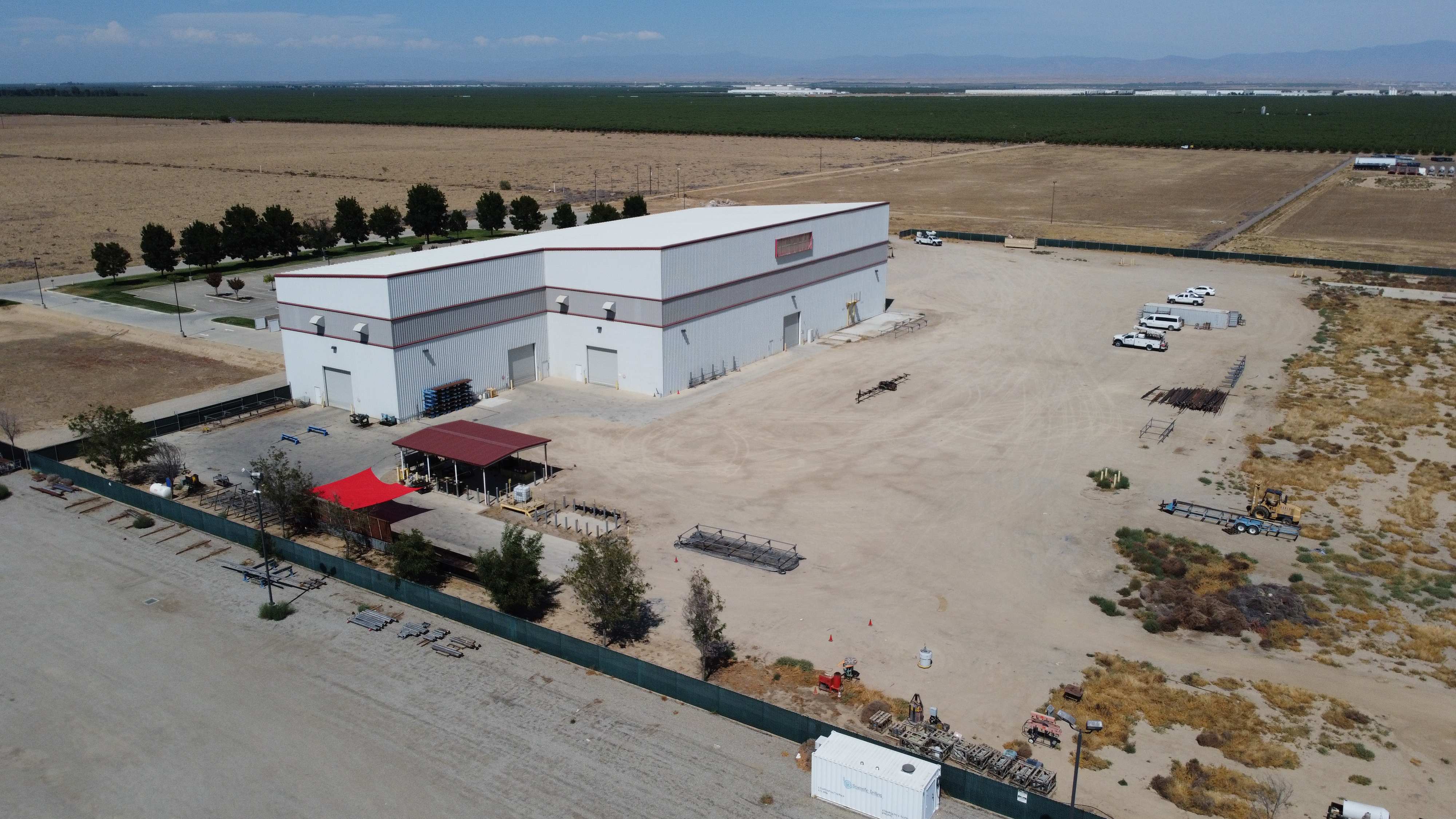
Selling your building and renting it back can free up most of your equity without moving a single pallet. Here is how the deal is priced, what each side gets and where California owners get surprised.
A sale leaseback is a deal in which a business sells the building it occupies to an investor and signs a long-term lease to stay. The owner turns real estate equity into cash, often close to full market value, without moving. The investor gets a property with a committed tenant and net lease income from the day escrow closes.
Key takeaways
- In a sale leaseback, the rent the seller agrees to pay largely sets the price the buyer will pay.
- A sale can free up close to 100% of a building’s value, while a conventional loan typically tops out around 60% to 75% of value.
- In California, the sale is a change in ownership. The property is reassessed, and a seller staying on as a net lease tenant usually pays the higher tax.
- Investors generally pay more, which means a lower cap rate, for longer lease terms and stronger tenant credit.
- The seller gives up future appreciation and control of the building, so the lease terms matter as much as the price.
What is a sale leaseback and how does it work?
A sale leaseback combines two contracts that close together: a purchase agreement and a lease. The owner sells to an investor and, at the same moment, signs a lease as the tenant. Nothing changes on the shop floor, and the trucks still back into the same docks the next morning.
For industrial property, the lease is almost always a net lease, in which the tenant pays rent plus property taxes, insurance and maintenance. Terms tend to run long, commonly 10 to 20 years, with fixed annual rent increases. In California, smaller industrial deals often start from the AIR CRE Standard Industrial/Commercial Single-Tenant Lease, Net, heavily modified. Larger investors usually bring their own lease.
Because the seller is also the future tenant, both sides negotiate price and lease at the same time. That is the key difference from a normal sale, where the buyer inherits whatever lease already exists.
- Value the building. Get a valuation and a market rent opinion.
- Set the lease terms. Decide on length, rent, escalations and who handles roof, structure and HVAC.
- Market the offering. Show it to net lease buyers and compare offers on price and lease terms together.
- Open escrow. The buyer completes due diligence on title, environmental condition, the building and tenant financials. A Phase I environmental site assessment is standard.
- Close. The sale and the lease start on the same day.
Why do owner-users sell and lease back their buildings?
Capital is the main reason. A building that is paid off, or close to it, can hold more of a company’s net worth than the business itself. Selling it puts that equity to work in equipment, inventory, an acquisition, debt payoff or a partner buyout.
A sale leaseback can also deliver more cash than borrowing. Net lease investor W. P. Carey wrote in 2021 that sellers can receive 100% of a property’s value, compared with 50% to 70% through traditional mortgage financing. A June 2026 Commercial Property Executive article put a conventional loan at roughly 60% to 75% of value.
Succession planning is another driver. An owner nearing retirement may want to cash out of the real estate while the business keeps running, or separate the building from a business being sold. A national net lease brokerage pointed to retiring owners as one reason sale leaseback activity has picked up. For the broader own-or-rent question, see our guide to buying versus leasing commercial property.
Sale leaseback vs. cash-out refinance vs. keep owning
| Factor | Sale leaseback | Cash-out refinance | Keep owning |
|---|---|---|---|
| Cash raised | Up to full market value, less payoff, costs and taxes | Typically 60% to 75% of value, less payoff | None |
| Future appreciation | Goes to the investor | Stays with you | Stays with you |
| Ongoing cost | Rent plus net expenses, with escalations | Debt service plus expenses | Expenses only |
| Interest rate risk | None on the building | Yes, at refinance or if floating | None |
| Control of the building | Limited to lease rights | Full, subject to loan covenants | Full |
| California property tax | Reassessed to sale price | No reassessment from a loan | No change |
| Taxable gain | Yes, at sale | No | No |
What do investors get out of a sale leaseback?
Investors get a long, freshly written lease instead of an older lease with a few years left. The tenant has already shown it wants the location, since it chose to stay. There is no lease-up period, no vacancy at closing and usually a tenant that knows the building’s quirks.
Lease length shows up directly in pricing. A national net lease brokerage’s Q2 2026 report put the median asking cap rate for net lease properties with 16 to 20 years of lease term remaining at 5.95%, against 7.60% for five years or less. Those are asking rates on listed properties, not closed deals. The same report put the average asking cap rate for single-tenant industrial at 7.25% for the quarter. A cap rate is a building’s annual net income divided by its price.
Locally, a regional brokerage’s Q2 2026 Bakersfield industrial report showed a market cap rate of 7.23% and an average sale price of $123 per square foot. Those are market averages for all industrial sales, not sale leasebacks. A deal with a strong tenant and long term should price better than that average, and one with a short term or weak financials will not.
What each side gets
| Seller (becomes tenant) | Buyer (becomes landlord) |
|---|---|
| Cash from equity, often near full value | Income-producing property from day one |
| Stays in place with no move or downtime | Long lease written to current terms |
| Predictable occupancy cost for the lease term | Tenant with an operating stake in the site |
| Rent is generally a deductible business expense | Depreciation on the building |
| Gives up appreciation and residual value | Takes on tenant credit and re-leasing risk |
How is a sale leaseback priced?
Investors price the deal off the rent: price equals annual net rent divided by the cap rate. If the rent goes up, the price goes up, and the seller pays that higher rent for the whole term. The same math drives any net operating income valuation.
That creates a real trade-off. Pushing rent above market raises the sale price. It also raises your occupancy cost for 10 years or more and makes the deal look weaker to buyers who check rent against the market. A broker’s market rent opinion anchors the number.
The cap rate depends on tenant credit, lease length, building quality and how easy the space would be to re-lease. A modern 32-foot clear distribution building near I-5 is easier to re-tenant than a specialized food processing plant, and buyers price that difference.
What are the risks and trade-offs for the seller?
You give up appreciation. If Bakersfield industrial values keep rising, that gain belongs to the investor. You also give up the land’s residual value at the end of the lease, which matters for older buildings on large parcels.
You also become a tenant. Expansions, new dock doors, power upgrades and some equipment installations may need landlord approval. If your business outgrows the building or shrinks, you are tied to a long lease unless you negotiate assignment and sublease rights up front.
Does a sale leaseback trigger a Prop 13 reassessment in California?
Generally yes, and this surprises local owners most. Under Proposition 13, property is reassessed to market value on a change in ownership, and assessed value otherwise rises by no more than 2% a year, according to the California State Board of Equalization. An owner who bought years ago may have an assessed value well below today’s price.
The sale resets that value to the purchase price, and under a net lease the tenant (you) pays the tax. Leases of 35 years or more, including renewal options, have their own change-in-ownership rules. Our article on Prop 13 reassessment for NNN tenants covers this in detail.
How are sale leaseback taxes and accounting handled?
A sale leaseback is a taxable sale. The IRS taxes unrecaptured Section 1250 gain from selling real property at a maximum 25% rate, with the remaining long-term gain at capital gains rates (IRS Topic No. 409). Some sellers reinvest proceeds in other real estate through a 1031 exchange, because business-use real property can qualify under IRS rules. Talk to your CPA before you sign a letter of intent.
On the accounting side, a lease with an option to buy the building back at a set price generally prevents sale treatment under ASC 842, according to PwC’s lease accounting guide. The deal is then booked as a financing. If buyback rights matter, a right of first refusal or first offer is usually the cleaner tool.
What lease terms matter most in a sale leaseback?
You write the lease from scratch, so you have more leverage than in almost any other lease negotiation. Use it on the terms that will matter in year eight, not just year one.
- Term and renewal options: long enough for the buyer’s pricing, with options that give you flexibility at the end.
- Rent escalations: fixed bumps compound over 15 or 20 years, so model the final-year rent. Our guide to annual rent escalations explains the options.
- Maintenance responsibilities: spell out who replaces the roof, structure, parking lot and HVAC.
- Assignment and sublease rights: essential if you might sell the business or downsize.
- Alterations: pre-approve likely improvements such as racking, power upgrades or added dock positions.
- Financial reporting and guarantees: limit what you share and who guarantees the lease.
- Purchase rights: a right of first refusal or first offer, rather than a fixed-price buyback option.
- SNDA and estoppel language: protects your occupancy if the new owner finances or sells.
When does a sale leaseback make sense in Kern County?
It works best for an established business with steady financials, a building it plans to occupy long term and a better use for the cash than holding real estate. Think of a trucking company in Bakersfield funding a fleet expansion, an ag processor in Delano adding a cold storage line or a family business in Shafter planning a generational handoff.
It works less well for owners who expect to move within a few years, businesses with thin or volatile financials and highly specialized buildings that investors see as hard to re-lease. In those cases a refinance, an SBA loan or a straight sale may be the better tool. For a deeper look at the investor side, see single-tenant net lease investing.
Example: a 40,000 SF Bakersfield warehouse
Assume a distribution company owns a 40,000 SF warehouse in Bakersfield with $1.5 million left on its mortgage. It agrees to a 15-year net lease at $0.80 per SF per month, or $384,000 a year, with fixed annual increases. These figures are illustrative assumptions, not a quote.
At a 7.25% cap rate, the price is $384,000 divided by 0.0725, or about $5,296,552. That is roughly $132 per SF. After paying off the $1.5 million loan, the owner has about $3.8 million before closing costs and income taxes.
Compare a cash-out refinance at 70% of value. A loan of about $3.71 million, minus the $1.5 million payoff, nets about $2.21 million. The owner keeps the building and its appreciation but takes on new debt service.
Now the Prop 13 piece. If the building’s assessed value is $2.2 million, the 1% base tax is about $22,000 a year. After the sale, the base tax on a $5.3 million assessment is about $53,000, plus any voter-approved debt and assessments. The company pays it as the net lease tenant.
How rent changes the sale price (40,000 SF, annual rent divided by cap rate)
| Monthly rent per SF (NNN) | Annual rent | Price at 7.00% cap | Price at 7.25% cap | Price at 7.50% cap |
|---|---|---|---|---|
| $0.75 | $360,000 | $5,142,857 | $4,965,517 | $4,800,000 |
| $0.80 | $384,000 | $5,485,714 | $5,296,552 | $5,120,000 |
| $0.85 | $408,000 | $5,828,571 | $5,627,586 | $5,440,000 |
Frequently asked questions
What is a sale leaseback in simple terms?
It is a sale of a building by the business that uses it, paired with a lease that lets the business stay. The seller keeps operating as a tenant, and the investor owns the property and collects rent. The seller converts equity into cash, and the buyer gets an occupied, income-producing property.
How long is a typical sale leaseback lease?
Industrial deals commonly run 10 to 20 years, often with renewal options. Longer terms usually support a higher price because investors pay more for long, secure income. A national net lease brokerage’s Q2 2026 asking-rate data shows the gap: 5.95% for 16 to 20 years of remaining term against 7.60% for five years or less.
Does a sale leaseback trigger Prop 13 reassessment in California?
Generally yes. The county assessor treats the sale as a change in ownership and reassesses the property to current market value. Under a net lease, the seller-turned-tenant usually pays the higher tax. Leases of 35 years or more, including options, follow special rules.
Can I buy my building back after a sale leaseback?
You can negotiate purchase rights, but a fixed-price repurchase option generally keeps the deal from counting as a sale under ASC 842. It would be recorded as a financing instead. A right of first refusal or first offer usually gives you a path back to ownership without that problem.
Is a sale leaseback better than refinancing?
It depends on how much cash you need and whether you want the building’s appreciation. A sale leaseback can raise close to full market value, while a refinance usually stops at 60% to 75%. A refinance avoids a taxable sale and a Prop 13 reset, but it adds debt and interest rate risk.
What do investors look for in a sale leaseback?
They look at the tenant’s financial strength, the lease length, how rent compares with market and how easily they could re-lease the building. Before closing they also review title, run a Phase I environmental assessment and inspect the building.
How are sale leaseback taxes handled?
The seller reports a taxable sale. The part of the gain tied to past depreciation can be taxed at up to 25% federally, and the rest at capital gains rates. Some sellers defer tax by reinvesting in other real estate through a 1031 exchange. After the sale, rent is generally a deductible business expense.
If you own your building in Bakersfield or elsewhere in Kern County and want to know what a sale leaseback could net you, or you are an investor looking for one, call Kern CRE at 661-885-6949 or contact us. Get Kern County CRE news monthly: subscribe to the Kern CRE report.
Sources
- Net Lease Market Report Q2 2026, The Boulder Group, July 2026.
- Q2 2026 Bakersfield, CA Industrial Market Overview, Lee & Associates, July 2026.
- The Appeal of Industrial Sale-Leaseback Transactions, W. P. Carey, October 2021.
- Sale-Leaseback or Commercial Loan: Which Path Works Best in 2026?, Commercial Property Executive, June 2026.
- The Sale-Leaseback Surge, Matthews Real Estate Investment Services, June 2026.
- Sale Leaseback Market Gains Momentum in 2025 as M&A Activity Returns, SLB Capital Advisors via PR Newswire, March 2026.
- Change in Ownership: Frequently Asked Questions, California State Board of Equalization.
- Publication 29: California Property Tax, An Overview, California State Board of Equalization, March 2025.
- Topic No. 409, Capital Gains and Losses, IRS, September 2026.
- Like-Kind Exchanges: Real Estate Tax Tips, IRS, May 2026.
- Leases Guide 6.3: Sale and leaseback, determining whether a sale has occurred, PwC Viewpoint.
- Standard Industrial/Commercial Single-Tenant Lease, Net (sample form), AIR CRE, 2019.
About this article
Kern CRE prepared this article with help from AI research and writing tools. An editor reviewed the draft, checked its facts against the sources linked above and edited it for accuracy and clarity. It is general information, not legal, tax, investment or financial advice; talk with a qualified professional about your situation.