
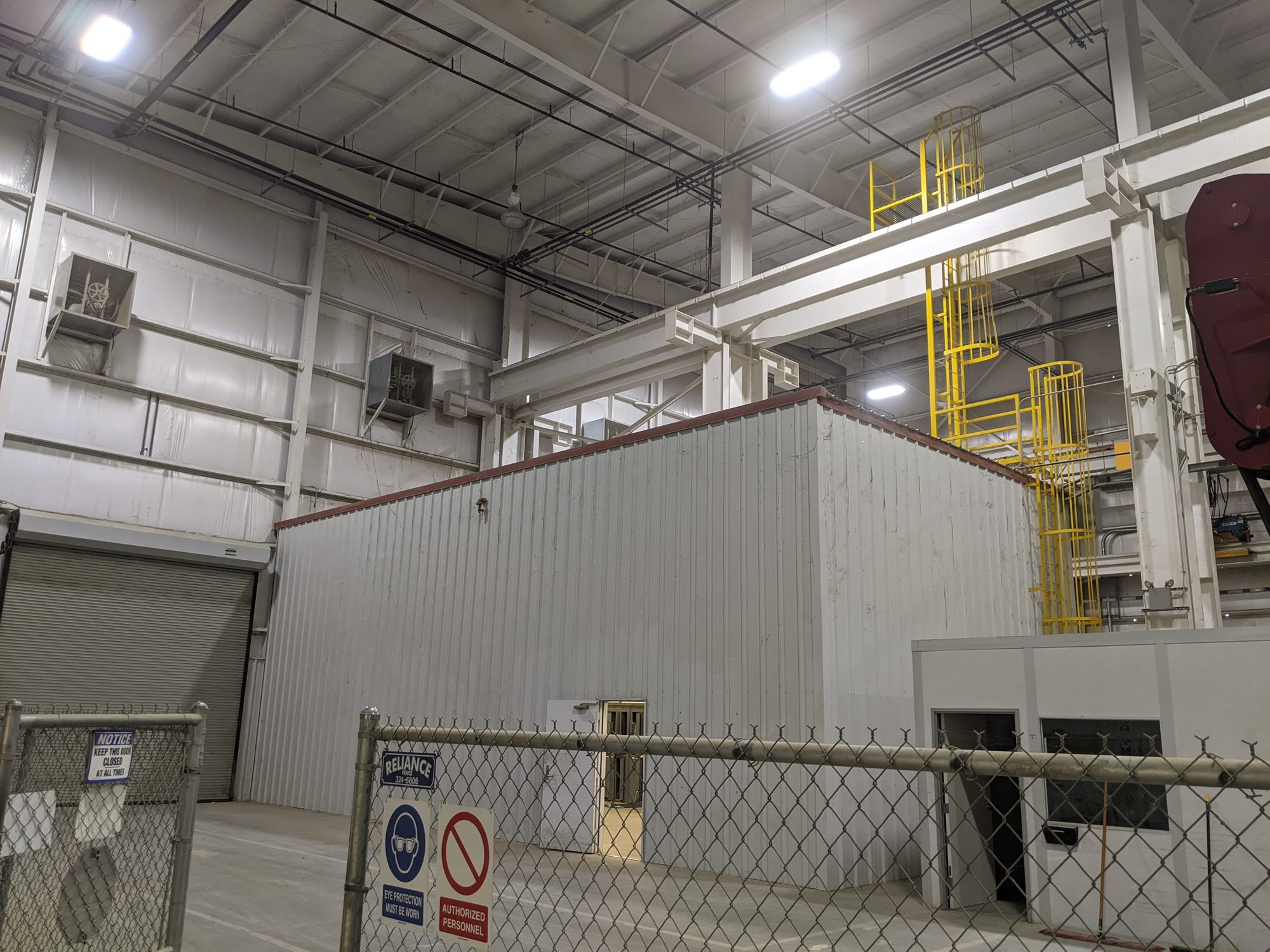
A July 9 wildlife permit lets Chevron grade six pads for future wells in the McKittrick Oil Field, as Kern County’s oil permitting restarts under SB 237.
The Chevron 7Z Development Project is Chevron U.S.A., Inc.’s plan to grade six oil field pads, 3.2 to 23.1 acres each, about 2.1 miles northwest of McKittrick in western Kern County, California. The California Department of Fish and Wildlife approved a state take permit for the work on July 9, 2026. The pads will support future wells.
Key takeaways
- The California Department of Fish and Wildlife approved incidental take permit No. 2081-2021-039-04 for Chevron’s 7Z Development Project on July 9, 2026, and the notice of determination was posted the same day.
- The project grades six pads within an area of about 83 acres and permanently removes 46.4 acres of habitat for the San Joaquin antelope squirrel and the Temblor legless lizard.
- Chevron must buy 140 acres of conservation credits or protect 140 acres of habitat land, backed by $2,431,684.42 in security. The permit expires June 30, 2031.
- SB 237, signed Sept. 19, 2025, allows up to 2,000 drilling permits a year in Kern County. Kern County said it would reopen its oil and gas permit portal on Jan. 2, 2026.
- Consumer Watchdog and FracTracker counted 353 new-drill permits approved statewide in the first half of 2026, compared with 17 in all of 2025, 23ABC reported on Sept. 22, 2026.
Chevron 7Z Development Project at a glance
| Item | Detail |
|---|---|
| Project | Chevron U.S.A., Inc. 7Z Development Project (pad construction) |
| Location | About 2.1 miles northwest of McKittrick; Township 30 South, Range 22 East, Sections 7 and 18 (Mount Diablo Base and Meridian); McKittrick Oil Field, unincorporated western Kern County |
| Applicant/owner | Chevron U.S.A., Inc. (permittee) |
| Jurisdiction | California Department of Fish and Wildlife (state take permit, responsible agency); Kern County Planning and Natural Resources Department (California Environmental Quality Act lead agency) |
| Case numbers | CDFW Incidental Take Permit No. 2081-2021-039-04; State Clearinghouse No. 2013081079 (Kern County oil and gas zoning ordinance environmental impact report) |
| Size | Six graded pads of about 3.2 to 23.1 acres; about 83-acre project area, about 70.6 acres graded; 46.4 acres of habitat permanently removed |
| Use | Pads for future oil production, injection and observation wells and related facilities (the wells are not covered by the take permit) |
| Mitigation | 140 acres of conservation credits or habitat management land; $2,431,684.42 security |
| Status | Take permit approved July 9, 2026; notice of determination posted July 9, 2026 |
| Next step | Pad construction (about 100 workdays over six months; no start date published); separate well permits; permit expires June 30, 2031 |
What is the Chevron 7Z Development Project?
It is site preparation for new oil field infrastructure, not a drilling approval. Under the state’s notice of determination, Chevron U.S.A., Inc. will “construct six large, graded pads (i.e., Work Areas) ranging in size from approximately 3.2 acres to approximately 23.1 acres.”
The pads “will support future oil production wells, injection wells, observation wells, and associated facilities and infrastructure, but those activities are not covered by this ITP,” the notice says. The permit itself places the work within about 83 acres, of which about 70.6 acres will be graded, over roughly 100 cumulative workdays across six months. The filings do not say how many wells are planned, do not explain the purpose of the observation wells and do not mention carbon storage.
What did the state approve?
The California Department of Fish and Wildlife (CDFW) approved Incidental Take Permit No. 2081-2021-039-04 under the California Endangered Species Act on July 9, 2026, and the State Clearinghouse posted the notice the same day. CDFW acted as a responsible agency, relying on Kern County’s environmental impact report for its oil and gas zoning ordinance, State Clearinghouse No. 2013081079.
The permit covers two species. The San Joaquin antelope squirrel is listed as threatened, and the Temblor legless lizard is a candidate for listing. The project will permanently remove 46.4 acres of their habitat, which CDFW describes as allscale scrub patches, vegetated areas of current well pads and road margins, and areas with small-mammal burrows.
To offset that, Chevron must buy 140 acres of credits from a CDFW-approved bank or permanently protect and manage 140 acres of habitat land. By our math, that is about three acres for each acre removed. The permit sets security at $2,431,684.42, puts long-term management funding at $905,963.89 and expires June 30, 2031, unless renewed.
Where is the 7Z project in the McKittrick Oil Field?
CDFW places the project in the southern San Joaquin Valley about 2.1 miles northwest of McKittrick, in Sections 7 and 18 of Township 30 South, Range 22 East, on the Reward U.S. Geological Survey quadrangle. State Routes 33 and 58 meet at McKittrick, and the town sits over the northeastern part of the McKittrick Oil Field.
The field is mature. Its first real well came in 1896, and operators have used steam flooding and fire flooding since the 1960s to recover its heavy oil.
Section 7 is already crowded with wells. In an October 2025 notice, the California Department of Conservation described Chevron reworking eight wells there, “in an already disturbed densely developed and active Cymric/McKittrick Oilfields.”
Neither the permit nor the notice explains the name “7Z.” A June 2026 Kern County notice for deepening a Chevron well labeled “7Z 2121, Sec. 7 – McKittrick Field” suggests the name may be a Chevron lease or well-group label.
Who is behind the project?
The permittee is Chevron U.S.A., Inc. In August 2024, Chevron announced it would move its headquarters from San Ramon to Houston and said California employees should see minimal impacts, KPRC reported.
At the time of the county’s June 2025 ordinance vote, Chevron said it employs more than 600 local workers and pays over $40 million a year in property taxes, South Kern Sol reported. In September 2026, 23ABC reported that Chevron had one active drilling rig in Kern. “The additional permits allow us to sustain the production that we have,” Chevron general manager of operations Ray Thavarajah told the station.
Chevron is also pursuing a Lost Hills solar-to-hydrogen project in Kern, noted in our Grannus ammonia plant article.
Why did Kern County oil permitting pick up in 2026?
Two changes reopened the permit pipeline: a revised county ordinance and a new state law. The 7Z permit rests on an ordinance with a long legal history. CDFW’s permit cites the county’s 2015 environmental impact report, a 2020-21 supplemental recirculated report and a 2025 second supplemental recirculated report. It lists certification dates of Nov. 9, 2015, March 9, 2021 and June 26, 2025.
Supervisors voted unanimously in late June 2025 to approve a revised ordinance that could allow nearly 2,700 new wells a year, after “years of legal battles and nearly $68 million in litigation costs,” 23ABC reported.
Gov. Gavin Newsom signed SB 237 on Sept. 19, 2025. It allows up to 2,000 drilling permits a year in Kern, with a 10-year sunset on provisions that treat the 2025 environmental report as “sufficient, complete, and not subject to lawsuits for new drilling,” according to a Greenberg Traurig alert. After a court discharged the writ in the ordinance case on Dec. 4, 2025, the county planned to reopen its permit portal on Jan. 2, 2026, Bakersfield Now reported.
Permits followed. An analysis of state data by Consumer Watchdog and FracTracker found 353 new-drill permits approved statewide in the first half of 2026, compared with 17 in all of 2025, 23ABC reported. Consumer Watchdog, which criticizes the law, said Chevron led all operators through May 9 with 133 permits.
State setbacks are a separate test. Under SB 1137, the state stopped approving new well permits within 3,200 feet of homes, schools and other sensitive sites. Our SB 1137 explainer covers the rule. The 7Z filings do not address setbacks. The 2.1-mile distance is to the town, not to individual homes.
What does McKittrick oil field development mean for Kern County real estate?
One six-pad project will not move vacancy numbers, but a sustained rise in permits could lift demand for yards and shop space. Oil still matters to the county budget. Oil and gas property accounts for about 11% of Kern County’s property tax revenue, according to a 2026 UC Merced Community and Labor Center report. The report puts Kern at 70% to 77% of California’s oil output over two decades, while state production fell from 272 million barrels in 2000 to 124 million in 2022. It says Kern oil and gas jobs peaked at 19,670 in 2013 and have since fallen to 10,850.
So far, the permit rebound is not visible in payroll data. Mining and logging employment in the Bakersfield-Delano metro held between 6,600 and 6,700 jobs from March through August 2026, with August preliminary, according to the Bureau of Labor Statistics. That category is broader than oil and gas, so it does not compare directly with the UC Merced job count.
For industrial property, the link runs through contractors. Pad grading, drilling and well service bring crews, equipment and trucks, and those firms need shops and yards. Thavarajah told 23ABC the industry is “an interconnected ecosystem,” where slower oil investment means “some of the supporting companies and our partners that work with us slow down.”
The market has room. National brokerage reports for Q2 2026 put industrial availability at 10.1% across 67.4 million square feet, and 11.6% in an Outlying Kern County submarket. Regional brokerage data for Q2 2026 measured vacancy at 9.55% and found specialized and flex properties holding stronger occupancy than logistics buildings.
In our view, more oil permits are likely to show up first as demand for yards, truck parking and service shops, the kind of use in our Taft Highway truck repair facility article. Entitled heavy industrial land, such as the Central Valley Renewables refinery site on Rosedale Highway, could follow.
What concerns have been raised?
The sources cited here report no opposition specific to the 7Z pads. The broader 2025 ordinance drew objections over air quality and health, South Kern Sol reported.
Wildlife is the main constraint in this permit. The Temblor legless lizard became a state candidate species in June 2022, and its range of about 1,070 square miles includes the McKittrick and Midway-Sunset fields, Sierra magazine reported in 2023. Within that range, new oil and gas development must survey for the species, the magazine said.
What happens next for the 7Z pads?
State take permits are common for Westside energy projects. See our article on the Maricopa Sun Solar Complex east of Taft.
- Pad construction: about 100 cumulative workdays over six months, per the permit. No start date has been published, and the sources cited here do not say whether grading has begun.
- Mitigation: 140 acres of credits or protected habitat land, with $2,431,684.42 in security.
- Wells: production, injection and observation wells fall outside the take permit and would go through Kern County’s oil and gas permitting and the state’s well permit process.
- Permit term: the take permit expires June 30, 2031, unless CDFW renews it.
- CEQA: a challenge to a notice of determination generally must be filed within 30 days, a window that closed in early August 2026. The sources cited here report no challenge.
Frequently asked questions
What is the Chevron 7Z Development Project?
It is a Chevron U.S.A., Inc. plan to grade six pads of about 3.2 to 23.1 acres each in the McKittrick Oil Field, northwest of the town of McKittrick in western Kern County. The pads are meant for future production, injection and observation wells. The California Department of Fish and Wildlife issued the take permit for the pad work on July 9, 2026.
Where is the 7Z project located?
State filings put it about 2.1 miles northwest of McKittrick, in Sections 7 and 18 of Township 30 South, Range 22 East, on the Reward quadrangle map. The site is inside the McKittrick Oil Field in unincorporated western Kern County. State Routes 33 and 58 meet in McKittrick.
Which species does the permit cover, and what mitigation is required?
The permit covers the San Joaquin antelope squirrel (threatened) and the Temblor legless lizard (a candidate species). The work permanently removes 46.4 acres of habitat. To offset it, Chevron must buy 140 acres of credits or protect 140 acres of habitat land, with $2,431,684.42 posted as security. The permit runs through June 30, 2031.
Does the 7Z permit approve new oil wells?
No. The state notice says wells and related facilities are “not covered by this ITP.” The permit covers pad construction only, meaning track-out control, vegetation removal, site preparation, grading and compaction. Any wells would need separate approval from Kern County and the state’s well permitting process.
What is SB 237 and how does it affect Kern County oil permits?
SB 237 is a state law signed Sept. 19, 2025 that allows up to 2,000 drilling permits a year in Kern County. It also treats the county’s 2025 supplemental environmental report as sufficient for new drilling, with a 10-year sunset, according to Greenberg Traurig. Kern planned to reopen its oil and gas permit portal on Jan. 2, 2026.
Is the 7Z project related to carbon capture or storage?
Not according to the state filings. The state notice and the take permit describe pads for oil production, injection and observation wells. Neither mentions carbon dioxide, carbon storage or Class VI wells, and neither says what the observation wells will monitor.
If you own or lease industrial land on the Westside or in Bakersfield and want to know how the oil permit rebound affects demand for yards and shop space, call Kern CRE at 855-KERN-CRE (855-537-6273) or contact us. Get Kern County CRE news monthly: subscribe to the Kern CRE report.
Sources
- Chevron U.S.A., Inc. 7Z Development Project (CESA Incidental Take Permit No. 2081-2021-039-04), Notice of Determination, SCH 2013081079, CEQAnet, Governor’s Office of Land Use and Climate Innovation, posted July 9, 2026.
- Incidental Take Permit No. 2081-2021-039-04, Chevron U.S.A., Inc., 7Z Development Project, California Department of Fish and Wildlife, Central Region, 2026.
- PLO26-00792, Notice of Exemption (Chevron well 7Z 2121, Sec. 7, McKittrick Field), Kern County Planning and Natural Resources Department via CEQAnet, June 1, 2026.
- Notice of Exemption, rework of eight wells, McKittrick/Cymric Oil Field, T30S R22E Sec. 7, California Department of Conservation via CEQAnet, Oct. 20, 2025.
- McKittrick Oil Field, Wikipedia.
- Chevron moving its headquarters to Houston from California, KPRC Click2Houston, Aug. 2, 2024.
- Kern Supervisors pass oil ordinance amid pollution and health concerns, South Kern Sol, June 27, 2025.
- Kern County Supervisors approve oil and gas permitting ordinance for a third time, 23ABC News, June 26, 2025.
- New Law Opens Door to 2,000 Oil Well Permits a Year in Kern County, 23ABC News, Sept. 23, 2025.
- California Enacts SB 237 to Streamline New Oil Well Permits in Kern County and Increase Output, Greenberg Traurig, Oct. 7, 2025.
- Kern County to resume oil and gas permits in 2026 after court decision, Bakersfield Now, Dec. 7, 2025.
- New California state law fuels a dramatic surge in Kern County oil drilling permits, leaders say, 23ABC News, Sept. 22, 2026.
- Oil Permits Surge In First Q 2026 With Majority For Dangerous Extraction Techniques; Watchdogs Warn New State Drilling Law Unfair, Consumer Watchdog, May 27, 2026.
- Understanding California’s Oil and Gas Safety Zones: Senate Bill 1137, California Geologic Energy Management Division.
- Fueling Transitions: California’s Oil and Gas Industry Decline, and Its Implications for Employment, Property Taxes, and County Budgets, UC Merced Community and Labor Center, 2026.
- Bakersfield-Delano, CA, Economy at a Glance, U.S. Bureau of Labor Statistics (August 2026 preliminary).
- Bakersfield Industrial MarketBeat, Q2 2026, Cushman & Wakefield, Q2 2026.
- Q2 2026 Bakersfield, CA Industrial Market Report, Lee & Associates, July 2026.
- A Rare Legless Lizard Could Stop Oil Drilling in Its Tracks, Sierra magazine, July 19, 2023.
- Notice of Preparation of a Draft EIR, Chevron Lost Hills Solar to Hydrogen Project, Kern County Planning and Natural Resources Department, June 27, 2025.
About this article
Kern CRE prepared this article with help from AI research and writing tools. An editor reviewed the draft, checked its facts against the sources linked above and edited it for accuracy and clarity. Details come from public records and the sources cited; unless stated, Kern CRE and ASU Commercial were not involved in the transaction or project.