
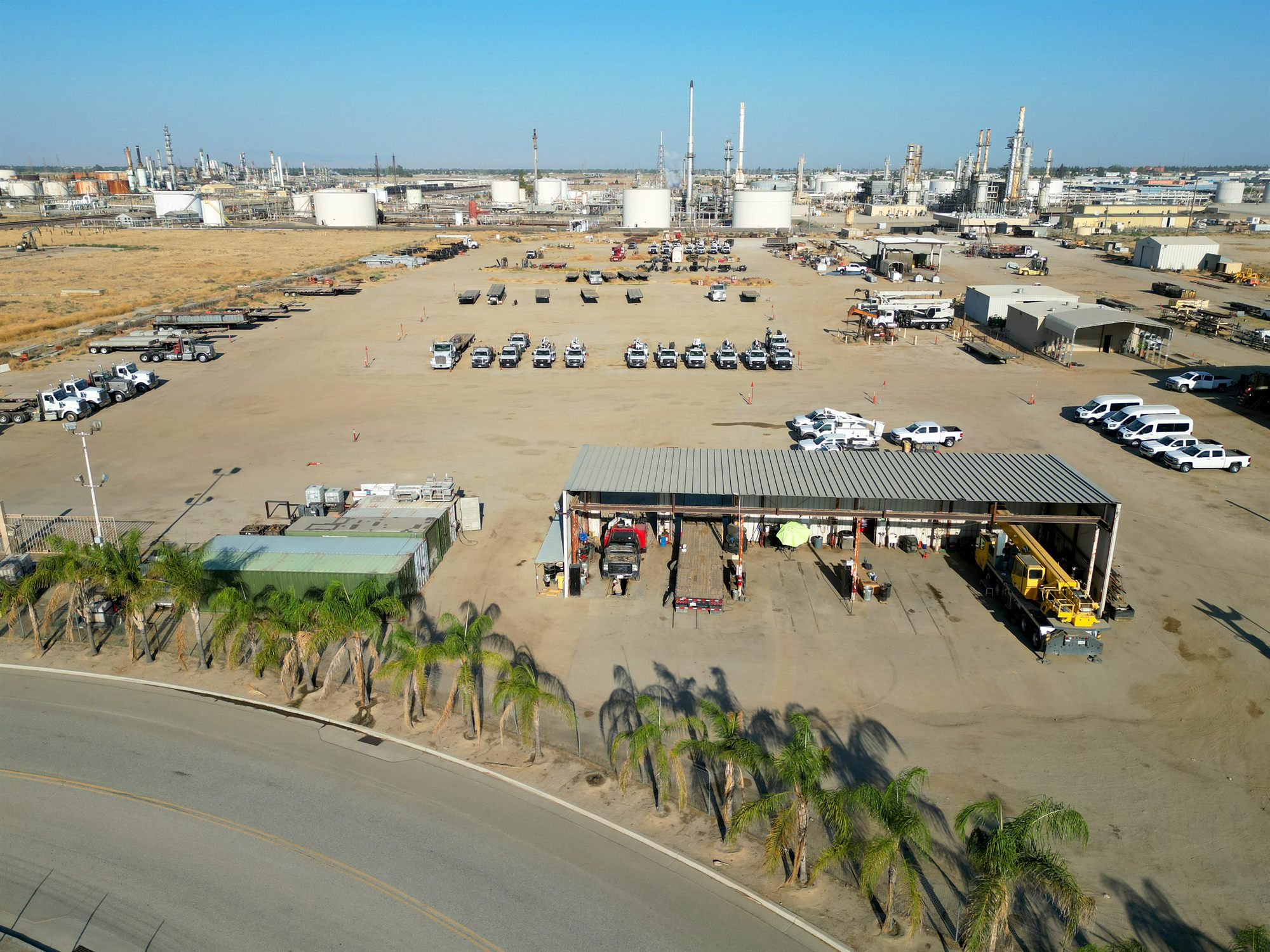
California’s first permanent CO2 storage began at Elk Hills in May 2026. Here is the legal framework, who owns the underground storage space, how pipelines are regulated and what it means for land and industry in Kern.
Carbon capture in Kern County centers on Elk Hills, where California Resources Corp. (CRC) began injecting CO2 on May 26, 2026, under California’s first U.S. Environmental Protection Agency Class VI permits. State law sets the rules. SB 905 (2022) created a California Air Resources Board (CARB) program with 100-year monitoring and financial responsibility. SB 1314 (2022) bars using captured CO2 for oil recovery. SB 614 (2025) lets intrastate CO2 pipelines resume once State Fire Marshal rules are adopted.
Key takeaways
- CRC began California’s first permanent CO2 injection at Elk Hills on May 26, 2026, into a reservoir permitted for about 1.46 million metric tons a year.
- SB 905 (Chapter 359, Statutes of 2022) requires 100 years of post-injection monitoring and financial responsibility. It also vests pore space, the rock pores that hold stored CO2, in the surface owner unless that right was severed.
- SB 1314 (Chapter 336, Statutes of 2022) bars injecting captured CO2 into Class II wells for enhanced oil recovery. The 2025 federal tax parity for oil recovery therefore does not help California projects.
- SB 614 (Chapter 529, Statutes of 2025) lets intrastate CO2 pipelines operate only after the State Fire Marshal adopts safety regulations. The law set a July 1, 2026, deadline, and the office opened a comment period on its final draft rules on June 18, 2026.
- Kern County supervisors unanimously approved the Carbon TerraVault I conditional use permit on Oct. 21, 2024, about two months before EPA’s first California Class VI permits.
Carbon capture in Kern County at a glance
| Item | Detail |
|---|---|
| Core state laws | SB 905 (Caballero), Chapter 359, Statutes of 2022; SB 1314 (Limón), Chapter 336, Statutes of 2022; SB 614 (Stern), Chapter 529, Statutes of 2025 |
| Federal permits and credits | EPA Class VI underground injection control permits; federal Section 45Q tax credit as amended by the One Big Beautiful Bill Act (July 4, 2025) |
| Administered by | EPA (Class VI wells), CARB (state carbon capture program), State Fire Marshal (intrastate CO2 pipelines), Kern County (land use) |
| Lead Kern project | Carbon TerraVault I at Elk Hills: county permit Oct. 21, 2024; final EPA permits announced Dec. 31, 2024; first injection May 26, 2026 |
| Who it affects | Surface owners (who generally own pore space), mineral owners, oil operators, industrial emitters, pipeline neighbors and energy-intensive users |
| Key requirements | 100 years of post-injection monitoring and financial responsibility; no drilling into a storage reservoir for 100 years; no captured CO2 for enhanced oil recovery |
| Status | One Kern storage site injecting; more Class VI applications pending; CARB still in pre-rulemaking; State Fire Marshal pipeline rules in final-draft comment stage since June 18, 2026 |
| What to watch | State Fire Marshal pipeline regulations, CARB program rules, more EPA permits, 45Q guidance, cap-and-invest treatment |
Why is Kern County at the center of carbon capture in California?
Kern has what carbon capture needs: depleted oil and gas reservoirs, well-mapped geology, existing pipelines and a workforce that knows how to drill and monitor wells. Carbon capture and storage (CCS) takes CO2 from an industrial source, compresses it and injects it deep underground for permanent storage. Kern’s reservoirs held hydrocarbons for millions of years.
The first project is Carbon TerraVault I (CTV I) at Elk Hills, about 20 miles west of Bakersfield. Kern County supervisors unanimously approved its conditional use permit on Oct. 21, 2024, according to a CRC release. EPA then issued the project’s final Class VI permits for the 26R reservoir. CRC announced them on Dec. 31, 2024. The permits cover four injection wells drilled more than a mile into the Monterey Formation, the Taft Midway Driller reported.
CRC announced its final investment decision on Jan. 6, 2025, with Brookfield holding 49% of the joint venture. First injection followed on May 26, 2026, according to a CRC release. It uses CO2 from CRC’s Elk Hills cryogenic gas plant, which CRC said would supply up to 100,000 metric tons a year at the start. CRC’s CTV I page describes the 26R vault.
What California laws govern carbon capture in Kern County?
Three state laws do most of the work, layered on top of federal well permits and federal tax credits.
| Law | What it does | Status |
|---|---|---|
| SB 905 (Chapter 359, Statutes of 2022) | Creates CARB’s Carbon Capture, Removal, Utilization, and Storage Program; 100-year monitoring and financial responsibility; pore space rules; paused CO2 pipelines pending federal rules | Enacted; CARB’s regulations were due Jan. 1, 2025, and are still in pre-rulemaking |
| SB 1314 (Chapter 336, Statutes of 2022) | Bars injecting captured CO2 into Class II wells for enhanced oil recovery (Public Resources Code 3132) | Enacted |
| SB 614 (Chapter 529, Statutes of 2025) | Lets intrastate CO2 pipelines operate after State Fire Marshal rules; 2-mile emergency planning zone | Enacted Oct. 10, 2025; rules were due July 1, 2026; final draft opened for comment June 18, 2026 |
| Safe Drinking Water Act Class VI program | EPA permits wells that inject CO2 for storage | EPA issues permits in California |
| Section 45Q (as amended July 4, 2025) | Federal credit of up to $85 per metric ton for industrial capture and $180 for direct air capture | In effect |
SB 905: the state framework
SB 905 told CARB to set up a CCS program and adopt regulations, including a unified permit application, by Jan. 1, 2025. Projects must monitor for at least 100 years after the last injection. They must also carry financial responsibility for the same period for corrective action, plugging, monitoring and site closure. A binding recorded agreement must bar drilling or extraction that could penetrate the storage reservoir for 100 years. The State Geologist reports leaks or seismic activity, and CARB can require changes or pauses.
CARB missed the deadline. On May 7, 2026, it released non-binding draft concepts for the program’s regulations, with public comment through June 5, 2026. Hunton Andrews Kurth noted that CARB had given no date for formal rulemaking. Until it does, project owners work from the statute and the EPA permit.
SB 1314: no captured CO2 for oil recovery
SB 1314 added Public Resources Code Section 3132. An operator may not inject concentrated CO2 from a capture, removal or sequestration project into a Class II well for enhanced oil recovery, including to help recovery from another well. In California, captured carbon must be stored, not used to produce more oil.
SB 614: reopening the door to CO2 pipelines
SB 905 barred CO2 pipelines until the federal Pipeline and Hazardous Materials Safety Administration (PHMSA) finished new rules. Those rules stalled, and Hunton notes PHMSA’s January 2025 proposal was withheld from the Federal Register. SB 614 keeps the federal wait for interstate lines. It lets intrastate pipelines operate once the State Fire Marshal adopts regulations at least as protective as PHMSA’s draft. The law set a July 1, 2026, deadline and also bars converting pipelines built for other liquids or gases to carry CO2.
The Office of the State Fire Marshal opened a five-day comment period on its final draft regulations on June 18, 2026, according to Food & Water Watch. The group said the rules were not yet adopted at that point. The pipeline timeline stays open until the office publishes final rules.
Who owns the pore space under Kern County land?
In most of Kern, the surface owner, not the mineral owner, controls the right to lease storage space. Under SB 905, now Public Resources Code Section 71462, title to a geologic storage reservoir belongs to the owner of the overlying surface estate unless it was severed and separately conveyed.
The law also requires conveyances of storage rights to describe the surface use rights, the geologic reservoir and how liability is allocated. Operators must give 60 days’ written notice to adjacent surface, subsurface and reservoir owners before development. The Natural Resources Agency was directed to publish a framework for multi-tract reservoir agreements by July 1, 2025.
For buyers, pore space is now a title issue. A prior owner may have leased or sold storage rights. A recorded 100-year no-drilling agreement can also limit future oil, gas or water well plans on the parcel. Our guide to SB 1137 oil well setbacks covers another land-use layer that affects Kern parcels with wells.
What are the safety concerns, and how does the law respond?
Pipeline safety drives most of the public debate. The Assembly committee’s analysis of SB 614 describes a February 2020 rupture in Satartia, Mississippi. A CO2 pipeline serving oil recovery failed, residents were evacuated and 46 people were hospitalized. CO2 is heavier than air and can pool in low areas.
SB 614 responds with siting rules. An operator may not build a pipeline where sensitive receptors sit within a 2-mile emergency planning zone unless validated computational fluid dynamics modeling shows the exposure risk is acceptable to the lead agency. Sensitive receptors include residences, schools, daycares, parks, hospitals, nursing homes and public-facing businesses. The State Fire Marshal can order shutdowns, and a ruptured line must stay off until the cause is found.
State officials quoted by the Taft Midway Driller describe CTV I as a step toward California’s climate goals. Opponents of new CO2 infrastructure point to accidents like Satartia and to the long-term liability of storage. Environmental groups that commented on the State Fire Marshal’s draft rules urged the agency to put community safety first. Food & Water Watch said about two dozen carbon capture projects are proposed in California, most in pollution-burdened areas. The 100-year monitoring, financial responsibility and pipeline siting rules are the state’s response.
What did the 2025 federal tax law change for carbon capture?
The One Big Beautiful Bill Act, signed July 4, 2025, kept the Section 45Q credit. The Carbon Capture Coalition puts it at $85 per ton for industrial capture and $180 for direct air capture, with new restrictions on certain foreign-influenced entities. Clifford Chance notes the biggest change. CO2 used for enhanced oil recovery now earns the full $85, up from $60, for equipment placed in service after July 4, 2025. Our overview of the law’s real estate changes covers the rest.
That parity matters less in Kern than in Texas or Wyoming. SB 1314 bars using captured CO2 for oil recovery in California, so Kern projects earn 45Q through permanent storage, which already qualified at the top rate.
What does carbon capture mean for Kern County industrial real estate?
Storage hubs attract emitters. Industrial users that need to cut emissions, such as hydrogen, ammonia, cement or gas processing operations, have a reason to locate where storage and, eventually, pipelines exist. Land near Elk Hills, Tupman and Taft with access to highways, power and rail is the most likely beneficiary. Timing depends on the State Fire Marshal rules and more EPA permits. Our article on the Grannus ammonia plant shows one site in that category.
Power is part of the story. CRC has proposed a data center at Elk Hills, covered in our Elk Hills data center article. Decarbonfuse reported that CRC has Class VI applications pending for additional reservoirs. A separate East Kern project, the RB Inyokern data center, shows how power-hungry projects are drawing regulators’ attention across the county.
For owners and lenders, the practical issues are title (pore space and 100-year agreements), easements for future CO2 pipelines, and how a 2-mile emergency planning zone could affect nearby residential or public-facing commercial uses. Those questions belong in due diligence for any parcel near a storage site or proposed pipeline route. State cap-and-invest and fuel-standard rules also shape the economics; see our guides to California cap-and-invest and the Low Carbon Fuel Standard.
What should Kern County landowners and businesses watch next?
The State Fire Marshal’s final pipeline rules come first, then CARB’s formal rulemaking and the next EPA permits.
- State Fire Marshal CO2 pipeline regulations, which SB 614 required by July 1, 2026. Until they take effect, intrastate CO2 pipelines cannot be used outside a permitted facility.
- CARB’s program regulations and unified permit under SB 905.
- Additional EPA Class VI permits for Kern reservoirs and the county land use approvals that go with them.
- Treasury and IRS guidance on 45Q, including the foreign entity rules.
- How CARB’s cap-and-invest rulemaking under AB 1207 and SB 840 treats captured and stored emissions.
Checklist for landowners near a proposed storage site
- A title report shows whether pore space has been severed, leased or conveyed.
- A recorded agreement may bar drilling into a storage reservoir under the land.
- Operators must give adjacent owners 60 days’ notice before development.
- An attorney can review any storage lease for term, surface use, liability allocation and post-closure obligations.
- Proposed pipeline routes and the 2-mile emergency planning zone affect where homes, schools or public-facing businesses can go nearby.
Illustrative example: federal 45Q credit math for a hypothetical Kern project
Assume a Kern industrial plant captures 100,000 metric tons of CO2 a year and stores it permanently in a permitted Class VI reservoir. The figures are hypothetical. They ignore wage, apprenticeship, credit-period and foreign-entity rules that can reduce or limit the credit, so eligibility depends on facts specific to each project.
| Item | Illustrative figure |
|---|---|
| CO2 captured and stored per year | 100,000 metric tons |
| 45Q rate for industrial capture with storage | Up to $85 per ton |
| Maximum annual federal credit | Up to $8.5 million (100,000 x $85) |
| Same CO2 used for enhanced oil recovery in California | Not allowed under SB 1314, so the 2025 oil recovery parity does not apply |
Frequently asked questions
Is carbon capture happening in Kern County?
Yes. CRC began injecting CO2 at its Carbon TerraVault I site in the Elk Hills field on May 26, 2026. It is the first permanent CO2 storage in California. The gas comes from CRC’s Elk Hills cryogenic plant. The county approved the permit in October 2024, and EPA’s Class VI permits were announced at the end of that year.
What is a Class VI well?
A Class VI well is an injection well that EPA permits under the federal Safe Drinking Water Act to store CO2 deep underground. EPA issues these permits in California. The first ones went to Carbon TerraVault for four wells in the 26R reservoir at Elk Hills, more than a mile down. CRC estimates the reservoir can hold about 38 million metric tons.
Can captured CO2 be used for enhanced oil recovery in California?
No. SB 1314 added Public Resources Code Section 3132, which bans injecting CO2 from a capture, removal or sequestration project into a Class II well for oil recovery. That is why the 2025 federal change giving oil recovery the full $85 per ton credit does not help California projects.
Are CO2 pipelines allowed in California?
Not outside a permitted facility so far. SB 905 paused CO2 pipelines until federal rules were finished. SB 614 lets intrastate lines operate once the State Fire Marshal adopts safety regulations, due July 1, 2026. It also adds a 2-mile emergency planning zone review near homes, schools and other sensitive receptors. The office opened a comment period on its final draft rules on June 18, 2026.
Who owns the pore space under my land in California?
Usually the surface owner. Under Public Resources Code Section 71462, added by SB 905, the owner of the overlying surface estate holds title to the storage reservoir unless it was severed and conveyed separately. That means the surface owner, not the mineral owner, can typically lease storage rights. A prior owner may have conveyed those rights, and a title report shows whether that happened.
How long must CO2 storage sites be monitored?
SB 905 requires monitoring for at least 100 years after the last injection, along with financial responsibility for the same period. That money covers corrective action, well plugging, monitoring and site closure. Projects must also record an agreement barring drilling that could penetrate the reservoir for 100 years, which can limit uses of the land above.
What did the One Big Beautiful Bill Act change for carbon capture?
The July 4, 2025, law kept the Section 45Q credit at up to $85 per ton for industrial capture and $180 for direct air capture. It added limits on certain foreign-influenced entities. It also raised the credit for CO2 used in enhanced oil recovery from $60 to $85 for equipment placed in service after enactment. California’s oil recovery ban blunts that last change here.
If you own or are buying land near Elk Hills or another potential storage site, call Kern CRE at 855-KERN-CRE (855-537-6273) or contact us. We can help you sort out the real estate questions and connect you with title and legal specialists. Get Kern County CRE news monthly: subscribe to the Kern CRE report.
Sources
- California SB 905 (2021-2022): Carbon sequestration, Carbon Capture, Removal, Utilization, and Storage Program, Chapter 359, Statutes of 2022, California Legislative Information, Sept. 16, 2022.
- California SB 1314 (2021-2022), Chapter 336, Statutes of 2022, California Legislative Information, Sept. 16, 2022.
- California SB 614 (2025-2026): Public resources: transportation of carbon dioxide, Chapter 529, Statutes of 2025, California Legislative Information, Oct. 10, 2025.
- Class VI Wells Used for Geologic Sequestration of Carbon Dioxide, U.S. Environmental Protection Agency.
- CRC’s Carbon TerraVault Receives EPA Permits for CO2 Injection and Storage in California, California Resources Corporation via GlobeNewswire, Dec. 31, 2024.
- CTV I (26R vault), California Resources Corporation.
- CRC Approves California’s First Carbon Capture and Storage Project, California Resources Corporation, Jan. 6, 2025.
- Carbon TerraVault Secures CO2 Storage Permits From EPA In California, Carbon Herald, Jan. 2, 2025.
- EPA approves permits for CRC Terravault wells, Taft Midway Driller, Jan. 9, 2025.
- Kern County Board of Supervisors Advance CRC’s Carbon TerraVault I Project, California Resources Corporation via GlobeNewswire, Oct. 21, 2024.
- California Resources Corporation achieves first CO2 injection at CTV I, California Resources Corporation, May 2026.
- California’s First CO2 Goes Underground at Elk Hills, Decarbonfuse, 2026.
- CRC proposes data center on Elk Hills, Taft Midway Driller, 2026.
- California Enacts Framework for Lifting Moratorium on Intrastate Carbon Dioxide Pipelines, Hunton Andrews Kurth (The Nickel Report), October 2025.
- California Air Resources Board Advances CCUS Program with Draft Concepts for Potential Regulations, Hunton Andrews Kurth (The Nickel Report), May 2026.
- CA Office of the State Fire Marshal Opens Comment Period on CO2 Pipelines, Food & Water Watch, June 18, 2026.
- SB 614 (Stern) committee analysis, California State Assembly, Transportation Committee, July 9, 2025.
- Enhanced Oil Recovery and Carbon Capture: Section 45Q in the age of Trump, Clifford Chance, October 2025.
- One Big Beautiful Bill Act (H.R. 1), Carbon Capture Coalition, July 2025.
About this article
Kern CRE prepared this article with help from AI research and writing tools. An editor reviewed the draft, checked its facts against the sources linked above and edited it for accuracy and clarity. It is general information, not legal, tax, investment or financial advice; talk with a qualified professional about your situation, including a California real estate attorney for pore space and storage lease questions and a tax adviser for 45Q.