
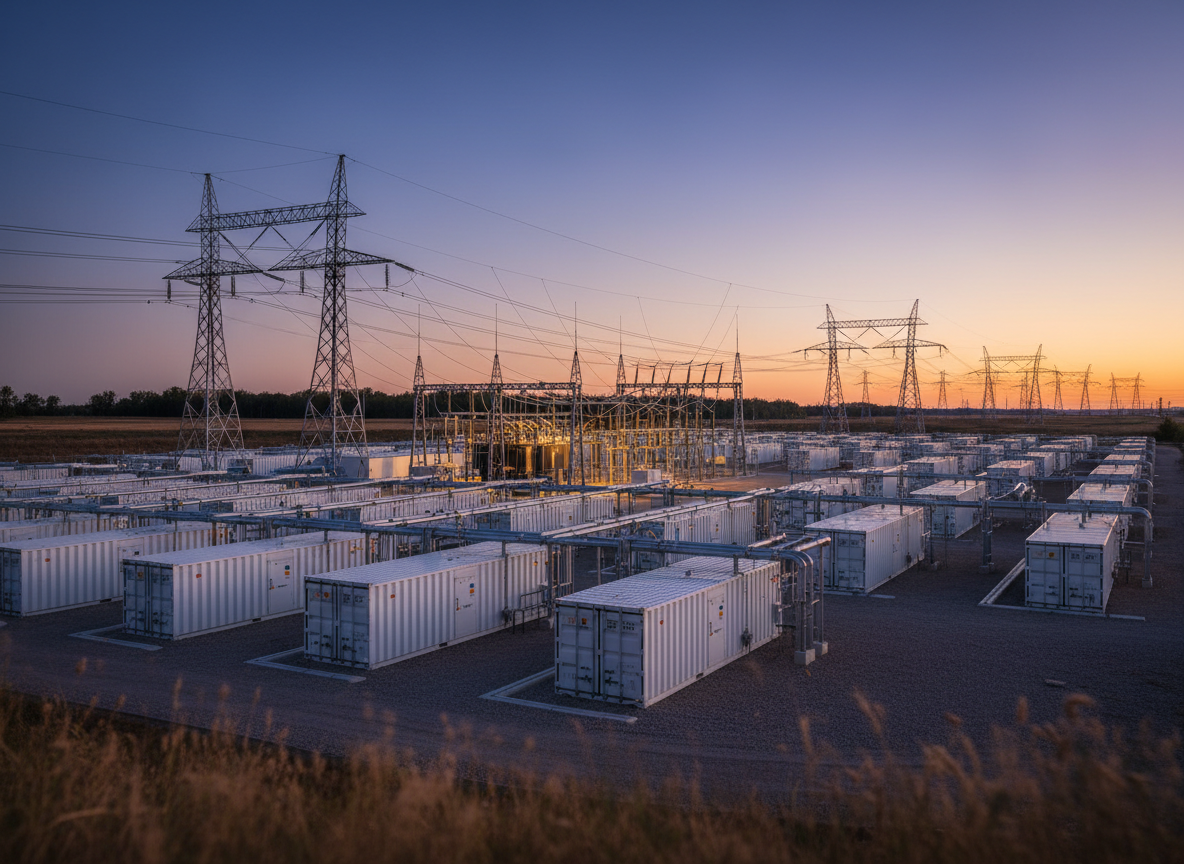
California now holds utilities to target dates for connecting new customers. Here is what the state set, how PG&E is doing against it, and how Kern County owners and tenants should plan around power.
SB 410 energization timelines are average and maximum deadlines the California Public Utilities Commission (CPUC) set for utilities to connect new customers to the grid. The Legislature passed SB 410 (the Powering Up Californians Act) and AB 50 in 2023. In September 2024 the CPUC adopted targets such as a 182-day average for service connections. They apply to Pacific Gas and Electric Company (PG&E) and Southern California Edison (SCE) customers across Kern County, California, and remain in effect.
SB 410 and AB 50 at a glance
| Item | Detail |
|---|---|
| Laws | SB 410 (Becker), Powering Up Californians Act, Chapter 394, Statutes of 2023; AB 50 (Wood), Chapter 317, Statutes of 2023 |
| Signed | Both approved Oct. 7, 2023 |
| Implemented by | CPUC Decision 24-09-020 (September 2024) in Rulemaking 24-01-018 |
| Key targets | 182-day average for Rule 15, Rule 16 and combined jobs; maximums of 306 to 357 days; longer maximums for circuit and substation work |
| Who it covers | Customers of PG&E, SCE and San Diego Gas & Electric requesting new or upgraded service |
| Reporting | Biannual utility reports to the CPUC; a Customer Delay Reporting Form for customers |
| 2026 update | CPUC approved a standard offer for flexible service connections on Feb. 5, 2026 |
| Status | Targets in effect; PG&E reports most completed jobs meet maximums, but many jobs remain open |
| What to watch | SB 410 cost-recovery funding that PG&E says expires at the end of 2026; further R.24-01-018 decisions |
Key takeaways
- SB 410, Chapter 394 of the Statutes of 2023, required the CPUC to set average and maximum energization targets by Sept. 30, 2024.
- The CPUC’s September 2024 targets call for a 182-day average for Rule 15, Rule 16 and combined service jobs, with maximums of 306 to 357 days.
- Where substation work is needed, maximum targets run to 1,021 days for an upgrade and 3,242 days for a new substation. Large loads still face multiyear waits.
- PG&E reported in September 2025 that about 48% of jobs submitted from Jan. 31, 2023 to June 30, 2025 were not yet complete.
- On Feb. 5, 2026, the CPUC approved a standard offer for flexible service connections. PG&E and SCE customers can take power before upgrades finish if they accept load limits.
What are SB 410 and AB 50, and why did California pass them?
They are the two 2023 laws that put deadlines and transparency rules on utility hookups. By 2023, builders, EV charging companies and housing developers across California were waiting many months, sometimes years, for new service.
Sen. Josh Becker’s SB 410 was approved Oct. 7, 2023 as Chapter 394, Statutes of 2023. It required the CPUC to “establish average and maximum target energization time periods by September 30, 2024” and required utilities to report their performance, according to the Assembly committee analysis of a later bill.
Assemblymember Jim Wood’s AB 50 was approved the same day as Chapter 317. It added Public Utilities Code section 933.5 on timely service and customer energization, and it addressed transparency. Utilities must give customers status updates and expected timelines. A 2024 follow-on, SB 1210 (Skinner), required utilities to post estimated fees and timeframes for new housing connections, per the same analysis.
Power is now a real estate issue, not just an engineering one. In a Feb. 26, 2026 release, a national brokerage said power availability, reliability and costs “are increasingly shaping site selection, development feasibility and asset performance.” For more on the industrial side, see power for industrial users.
What SB 410 energization timelines did the CPUC set?
The CPUC set a 182-day average for most new service work and maximums from 306 to 357 days. It adopted the targets in Decision 24-09-020 in Rulemaking 24-01-018, announced Sept. 12, 2024. It estimated they could cut connection times by “up to 49 percent compared to current operations,” according to the CPUC fact sheet. The decision is listed on the CPUC energization page.
| Type of work | Average target | Maximum target |
|---|---|---|
| Decision on an application | 10 days | 45 days |
| Rule 15 distribution line extension | 182 days | 357 days |
| Rule 16 service extension | 182 days | 335 days |
| Combined Rule 15 and 16 | 182 days | 306 days |
| EV infrastructure (Rules 29 and 45) | 182 days | 335 days |
| Main panel upgrade | 30 days | 45 days |
| New or upgraded circuit | None set | 684 days |
| Substation upgrade | None set | 1,021 days |
| New substation | None set | 3,242 days |
PG&E states that its tariff project timelines are calendar days and apply only while the utility controls the process. They exclude time for customer payments and site preparation, including permits. In its biannual report, PG&E treats main panel upgrades as business days. Utilities file biannual reports on how long jobs take, and customers who hit delays can file a Customer Delay Reporting Form with the CPUC.
What Rule 15 and Rule 16 mean
Rule 15 covers extending the utility’s distribution line to reach a property. Rule 16 covers the service extension from that line to the customer’s meter. Under PG&E’s Rule 16, PG&E installs and owns the service conductors, service transformers and meters. The applicant handles on-site trenching and backfill, conduits and substructures, transformer pads or vaults, and service equipment past the delivery point. The applicant also pays costs above any allowance. SCE has its own versions of these rules.
Are PG&E and SCE meeting the energization targets?
PG&E reports meeting the maximum target on most completed jobs, but the full cycle takes far longer than the utility’s own portion. The report PG&E filed Sept. 30, 2025 covers jobs with complete applications from Jan. 31, 2023 to June 30, 2025 and tracks two clocks.
For Rule 16 jobs, PG&E’s own time averaged 118 days, while the end-to-end cycle averaged 307 days. For combined Rule 15 and 16 jobs, PG&E’s time averaged 117 days and the end-to-end cycle 389 days. PG&E reported meeting the maximum target on 98.1% of Rule 16 jobs and 97.8% of combined jobs, but only 71% of main panel upgrades. The gap between the two clocks reflects time outside PG&E’s own work, such as customer steps, permitting and easements.
The same report says about 48% of jobs submitted in the window were not complete by June 30, 2025. It lists these causes: permitting, upstream distribution capacity upgrades, materials, staffing and customer-side delays such as inspections, easements and permits. The part of the gap that owners and tenants can control is the part worth managing. The figures here come from PG&E’s September 2025 filing. PG&E and SCE filed newer biannual reports in March 2026.
What changed in 2026: flexible service connections and cost recovery
The CPUC approved a standard offer for flexible service connections on Feb. 5, 2026 in Decision 26-02-025. A flexible connection lets a customer take power before grid upgrades finish by agreeing to stay within set load limits when the system is constrained. PG&E and SCE must offer it; SDG&E and small multi-jurisdictional utilities were not required to. Commissioner Darcie Houck said it “allows customers waiting for an upgrade to use power in the interim when it is safe to do so”.
Paying for faster hookups is the other open issue. PG&E’s report cites Decision 24-07-008, which created a memorandum account with interim rate relief subject to an annual cap, and states that “SB410 funding expires at the end of 2026.” In Decision 26-02-035, adopted Feb. 26, 2026, the CPUC closed the related PG&E application and moved remaining issues into the energization rulemaking.
The Legislature is still extending the model. Gov. Gavin Newsom signed SB 1196 (McNerney, 2026) on Sept. 28, 2026, according to Sen. Tim McNerney’s office. The law, which takes effect Jan. 1, 2027, sets similar timelines for accessory dwelling unit connections. PG&E, SCE’s parent Edison International and SDG&E opposed it at its June 24, 2026 Assembly committee hearing, according to the analysis.
How do energization timelines play out in Kern County?
For a typical warehouse with capacity on the street, the Rule 16 and combined Rule 15 and 16 targets are the relevant clocks. PG&E serves Bakersfield and most of Kern County, while SCE serves parts of eastern Kern around Tehachapi and Mojave. The serving utility depends on the parcel’s location.
Cold storage, manufacturing, fleet charging and data centers that need a new circuit or substation work face maximum targets of roughly two to nearly nine years.
Large loads are arriving. In eastern Kern, R&L Capital applied to the California Energy Commission in April 2026 for a Small Power Plant Exemption for the RB Inyokern Data Center, a proposed 238,000-square-foot data center near Inyokern with 99 MW of diesel backup generation (CEC docket 26-SPPE-01). Projects like this depend on transmission and substation capacity that no service timeline can create overnight. Stoel Rives reported that in September 2026 the CPUC approved Resolution E-5455, a PG&E agreement with Google to energize a 250 MW transmission-level load at 230 kV in San Jose.
For Kern’s industrial market, two similar buildings can have very different values depending on available amperage and the utility’s capacity at the nearest substation. Power is a diligence item, not an assumption. Related reads: build-to-suit vs. spec development and industrial building specs that matter.
How should a Kern owner, developer or tenant plan for power?
Start early and file a complete application. Most delays come from late starts or incomplete paperwork. The steps below reflect the CPUC’s process and PG&E’s published practices.
| Step | When | Who |
|---|---|---|
| Define the load: amps, voltage, phase, future growth, EV charging | Before the LOI or purchase contract | Tenant or buyer with an electrical engineer |
| Ask the utility about capacity at the site | During due diligence | Owner or developer |
| Submit a complete service application with load sheets and site plans | As early as design allows, alongside permits | Developer or contractor |
| Get the utility’s design, cost estimate and schedule in writing | After application review | Utility, with applicant review |
| Complete applicant-side work: trenching, conduit, pads, inspections, easements | Before energization | Applicant |
| Track the job against CPUC targets; use the delay form if needed | Throughout | Applicant |
PG&E says it assigns a representative within five business days of a new application. In leases and purchase agreements, write the electrical requirement into the letter of intent. Assign responsibility for any upgrade, and tie rent commencement or closing conditions to energization when the utility work falls on the landlord or seller. Consider a flexible service connection when an upgrade will take longer than the business can wait. The industrial leasing process covers where the LOI fits. If you are adding solar or chargers, see commercial solar under NEM 3.0 and EV charging requirements for commercial buildings.
What to watch next
- End of 2026: PG&E says SB 410 funding expires, which could affect how quickly utilities can staff and build energization work.
- Flexible connection tariffs: PG&E and SCE filings that implement the February 2026 decision.
- Next biannual reports: whether the share of open jobs falls and end-to-end times shorten.
- Large-load rules: data center and industrial demand will test substation timelines in Kern.
- SB 1196: the new law takes effect Jan. 1, 2027 and directs the CPUC to set processing timelines for small energization projects such as accessory dwelling units.
Example: what a power delay costs a Bakersfield cold storage user
A food distributor signs a lease on a new 150,000-square-foot Bakersfield building and needs a large service upgrade. It pays $70,000 a month at its current facility until it can move. All figures are illustrative.
If the job needs only a combined Rule 15 and 16 extension, the CPUC maximum is 306 days. A new or upgraded circuit raises the maximum to 684 days. The difference is about 12 months of double occupancy. Those maximums cover only utility-controlled time, so real schedules can run longer. That is why the electrical scope and the rent commencement trigger belong in the LOI.
| Scenario | CPUC maximum target | Approximate months | Carrying cost at old site |
|---|---|---|---|
| Combined Rule 15 and 16 extension | 306 days | 10 | $700,000 |
| New or upgraded circuit needed | 684 days | 22 | $1,540,000 |
Frequently asked questions
What is SB 410?
SB 410, the Powering Up Californians Act, is a 2023 law by Sen. Josh Becker (Chapter 394, approved Oct. 7, 2023). It directed the CPUC to set average and maximum energization targets by Sept. 30, 2024 and made utilities report how they perform. The CPUC adopted the targets in Decision 24-09-020.
How long does PG&E have to connect a new commercial building?
A Rule 16 service extension should average 182 days and finish within 335 days. A combined Rule 15 and 16 job should average 182 days with a 306-day maximum. Jobs needing a new circuit or substation work have maximums of 684 to 3,242 days. Customer-side work, permits and easements are not counted in those targets.
What can I do if PG&E misses the energization timeline?
File a Customer Delay Reporting Form with the CPUC. First, gather your application date, the date the utility deemed it complete and every utility request. Keep your own trenching, conduit, inspections and easements on schedule so the delay clearly sits on the utility side.
What is a flexible service connection?
It is an arrangement that lets you take power before a grid upgrade is finished, in exchange for staying under set load limits when the local system is constrained. The CPUC approved a standard offer on Feb. 5, 2026, and PG&E and SCE must provide it. It can get a business into a building sooner, as long as the limits fit how the operation uses power.
Who pays for utility upgrades for a new building?
Under PG&E’s Rule 16, PG&E installs and owns the service conductors, transformers and meters. The applicant pays for on-site trenching, conduit, transformer pads and service equipment, plus costs above any allowance. Between a landlord and tenant or a buyer and seller, it is negotiable. The lease or contract should say who pays, what amps and voltage will be delivered, and what happens if energization runs late.
Does SB 410 apply to SCE customers in eastern Kern County?
Yes. The CPUC targets apply to the large investor-owned utilities, including SCE, which serves parts of eastern Kern around Tehachapi and Mojave. SCE has its own line and service extension rules, and like PG&E it must offer a flexible connection where an upgrade will take time.
What is AB 50?
AB 50 by Assemblymember Jim Wood (Chapter 317, Statutes of 2023) is the transparency law. It requires utilities to give customers status updates and expected timelines for their projects. Along with SB 410’s targets and the 2024 law SB 1210, which requires posted fee and timeframe estimates for housing connections, it shapes how utilities handle new service requests.
If power capacity is shaping your search for a Kern County building or site, Kern CRE can help you build the electrical requirement into your search, LOI and lease from the start. Call Kern CRE at 855-KERN-CRE (855-537-6273) or contact us. Get Kern County CRE news monthly: subscribe to the Kern CRE report.
Sources
- California SB410, Powering Up Californians Act (2023), LegiScan.
- California AB50, Public utilities: timely service: customer energization (2023), LegiScan.
- Energy Regulatory Updates, September 30, 2026, Stoel Rives, Sept. 30, 2026.
- SB 1196 (McNerney) bill analysis, Assembly Committee on Utilities and Energy, June 24, 2026 hearing.
- CPUC Approves Decision to Support Timely Connection of New Customers to the Electrical Grid, California Public Utilities Commission (fact sheet hosted by SDG&E), Sept. 12, 2024.
- Energization (SB 410, AB 50), California Public Utilities Commission.
- PG&E Biannual Energization Report (public version), Pacific Gas and Electric Company, Sept. 30, 2025.
- New Energization Timelines Designed to Generate Faster Customer Connections, Pacific Gas and Electric Company, Oct. 1, 2024.
- Decision 26-02-025, Decision Establishing a Standard Offer for Flexible Service Connections, California Public Utilities Commission, Feb. 5, 2026.
- February 5, 2026 CPUC Voting Meeting Results, CalRegulatory, Feb. 5, 2026.
- Decision 26-02-035, Decision Closing Proceeding (A.21-06-021), California Public Utilities Commission, Feb. 26, 2026.
- Electric Rule No. 16, Service Extensions, Pacific Gas and Electric Company, revised May 17, 2025.
- Building and Renovation Services, Pacific Gas and Electric Company.
- Power availability becoming key driver of CRE value, JLL, Feb. 26, 2026.
- Docket 26-SPPE-01, RB Inyokern Data Center, California Energy Commission.
About this article
Kern CRE prepared this article with help from AI research and writing tools. An editor reviewed the draft, checked its facts against the sources linked above and edited it for accuracy and clarity. It is general information, not legal, tax, investment or financial advice; talk with a qualified professional about your situation.